Americas
Flag of Antigua and Barbuda
Antigua and Barbuda is a twin-island Caribbean nation known for its 365 beaches — one for each day of the year — and for hosting Antigua Sailing Week, one of the world's most celebrated regattas. The island of Antigua was a major British Royal Navy base in the 18th century, with English Harbour preserving the historic dockyard where Admiral Horatio Nelson was stationed. The country gained independence from Britain in 1981.

- CapitalSaint John's
- RegionAmericas
- Current flag since1967
- Main coloursRed, Black, Blue, White, Yellow
- Populationabout 94,000
- Areaabout 440 km²
- GeographyIsland nation
- Flags in history3
Population and area are rounded.
What the flag of Antigua and Barbuda means
The rising sun stands for the dawn of a new era, black for the African heritage of most of the people, blue for hope, and red for the energy of the people. The V shape stands for victory. The flag was designed by Reginald Samuel, an art teacher, and adopted in 1967.
More about the flag
Antigua and Barbuda is made up of two main islands and several smaller ones in the eastern Caribbean, and became fully independent from Britain on 1 November 1981, keeping the 1967 flag. It is known for having 365 beaches. The capital is St John's on Antigua, while Barbuda was badly damaged by Hurricane Irma in 2017.
How to recognise it
Red field with a large V of black, blue and white, and a golden sun rising from the black band.
Did you know?
Antigua has 365 beaches — one for every day of the year, according to local legend.
Easily confused with
Antigua and Barbuda's flag is often mixed up with these. Learn to tell them apart:
Flag history of Antigua and Barbuda
Every flag that has flown over Antigua and Barbuda, from today back through time.
1967–present
Antigua and Barbuda (independence)
Antigua's flag was designed by Reginald Samuel and chosen through a national competition ahead of independence from Britain in 1981 (the flag was first used in 1967 for associated statehood). The rising golden sun on a black field, flanked by red, blue, and white, represents the dawn of a new era. Black represents African heritage; blue the sea; white the sand; red the energy of the people; gold the sun. The V-shape of the triangle echoes victory.
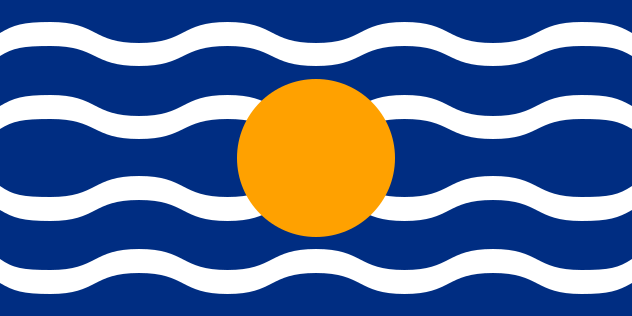
1958–1962
West Indies Federation
From 1958 to 1962, Antigua was part of the West Indies Federation — an ambitious attempt to unite Britain's Caribbean colonies into a single independent nation. Its flag showed four white wavy lines (the sea) and an orange sun on blue. The federation collapsed in 1962 when Jamaica and Trinidad withdrew, leaving the smaller islands to pursue independence separately over the following two decades.
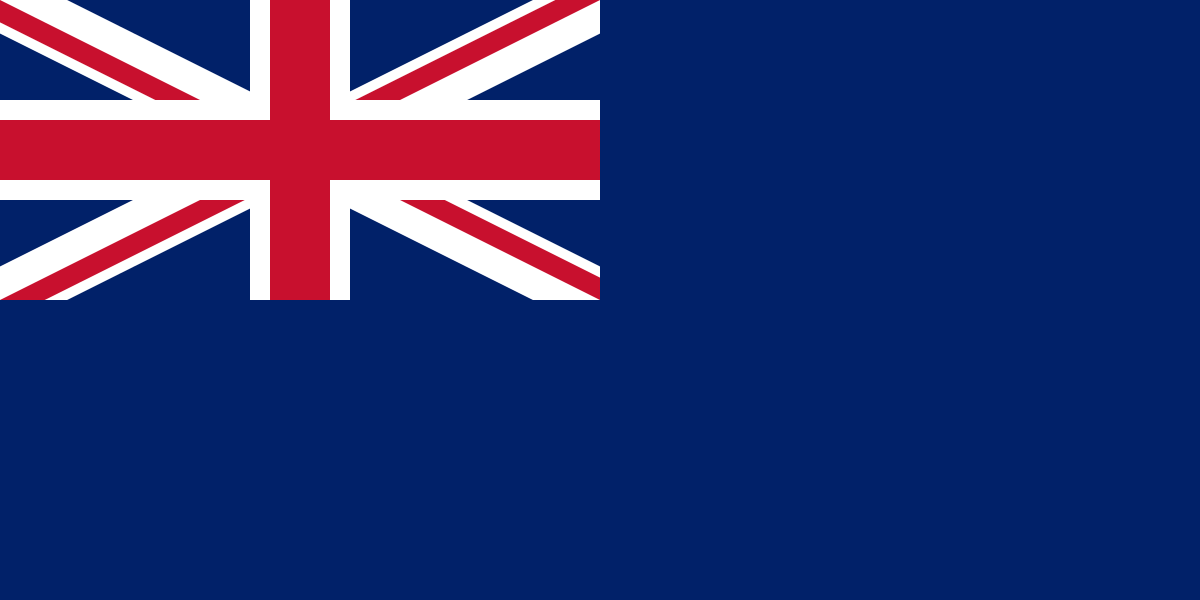
1632–1958
British Leeward Islands (colonial era)
England colonised Antigua in 1632 and it became one of the most profitable sugar islands in the Caribbean, worked by enslaved Africans. As part of the British Leeward Islands colony, Antigua flew the British Blue Ensign defaced with the Leeward Islands badge. The plantation economy left Antigua with an overwhelmingly African-descended population whose heritage the modern flag's black field honours.
Regional flags of Antigua and Barbuda
The 1 states, provinces and regions of Antigua and Barbuda with their own flags.
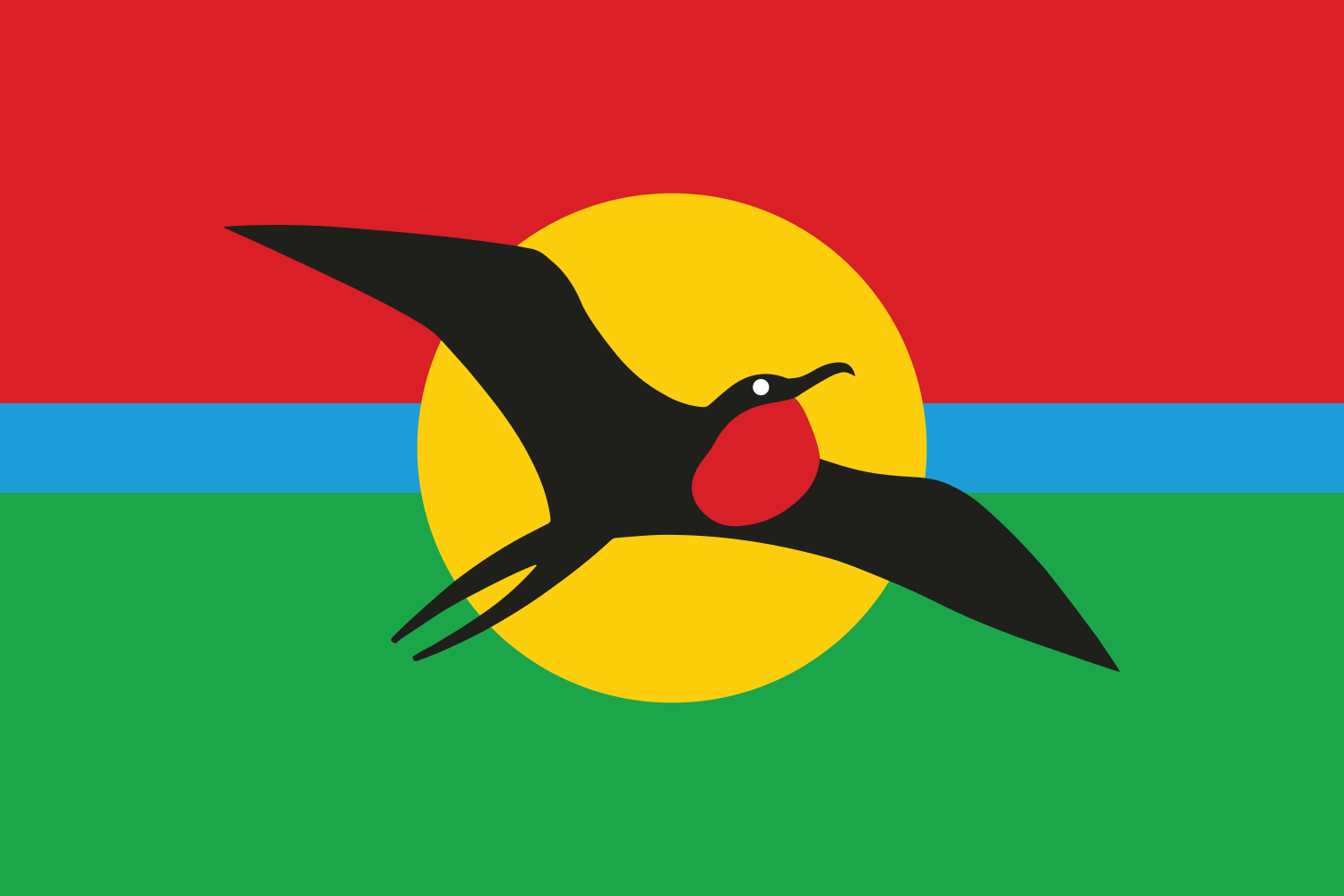
Barbuda
Other flags in red, black, blue, white and yellow
One other national flag uses the same main colours as Antigua and Barbuda's.
Play Globalio and learn Antigua and Barbuda's flag
 Trinidad and Tobago
 Eswatini