Oceania
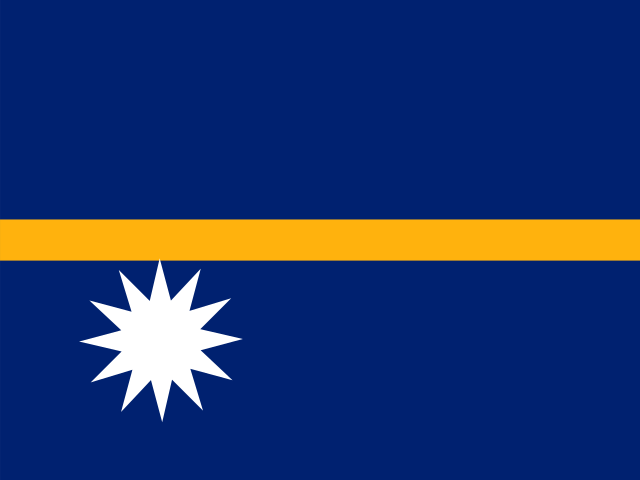
Flag of Nauru
Nauru is the world's smallest island nation, a single oval-shaped island of just 21 square kilometres in the central Pacific, roughly halfway between Hawaii and Australia. In the 1970s, Nauru briefly had one of the world's highest per-capita incomes from phosphate mining, before deposits were exhausted and the island's interior left as a barren, strip-mined landscape. Today Nauru faces significant economic and environmental challenges and has the world's highest rates of obesity.
- CapitalYaren
- RegionOceania
- Current flag since1968
- Main coloursBlue, Yellow, White
- Populationabout 13,000
- Areaabout 21 km²
- GeographyIsland nation
- Flags in history2
Population and area are rounded.
What the flag of Nauru means
The yellow line represents the equator, and the white star Nauru's position just south of it. The twelve points of the star stand for the island's twelve original tribes. The flag was adopted at independence in 1968.
More about the flag
Nauru, a single raised coral island of about 21 square kilometres, became independent on 31 January 1968, after being a United Nations trust territory administered by Australia. The star sits just below the yellow line because the island lies just south of the equator. For decades its economy depended on phosphate mining, which has left much of the island's interior bare rock. Nauru has no official capital.
How to recognise it
Blue with a yellow horizontal stripe and a white 12-pointed star below it on the left.
Did you know?
Nauru is the world's smallest island nation and the world's smallest republic.
Flag history of Nauru
Every flag that has flown over Nauru, from today back through time.
1968–present
Flag of Nauru
Adopted on independence day in 1968: a blue field with a gold stripe for the equator and a white 12-pointed star below it, depicting Nauru's position just south of the equator. The twelve points represent the island's original tribes.
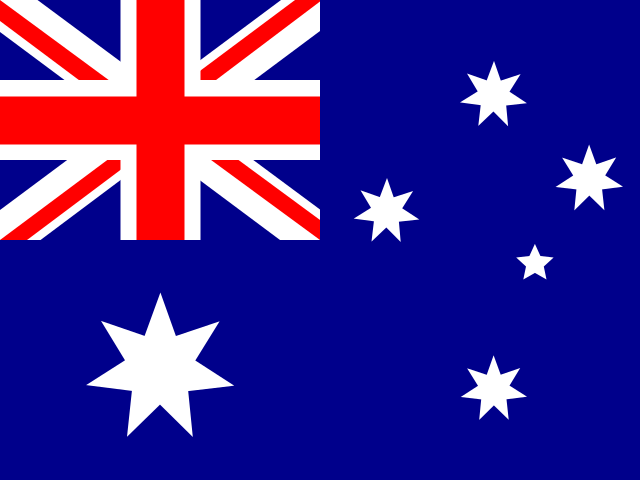
1920–1968
Australian-administered mandate
A German protectorate from 1888 and then briefly under Japanese wartime occupation, Nauru was for most of the 20th century a League of Nations (later UN) mandate administered by Australia, which flew its own flag while strip-mining the island's rich phosphate. Nauru never had a flag of its own until independence in 1968, won partly to gain control of that phosphate wealth.
Other flags in blue, yellow and white
4 other national flags use the same main colours as Nauru's.
Play Globalio and learn Nauru's flag
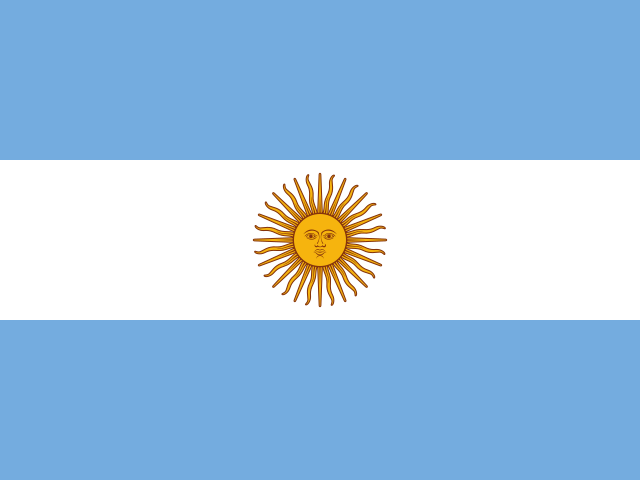 Argentina
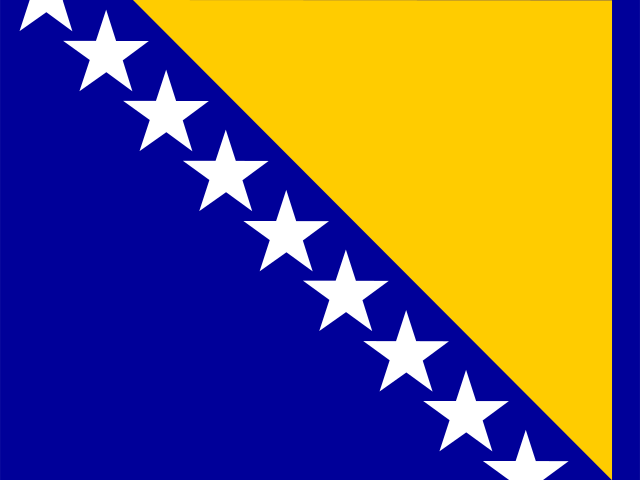 Bosnia and Herzegovina
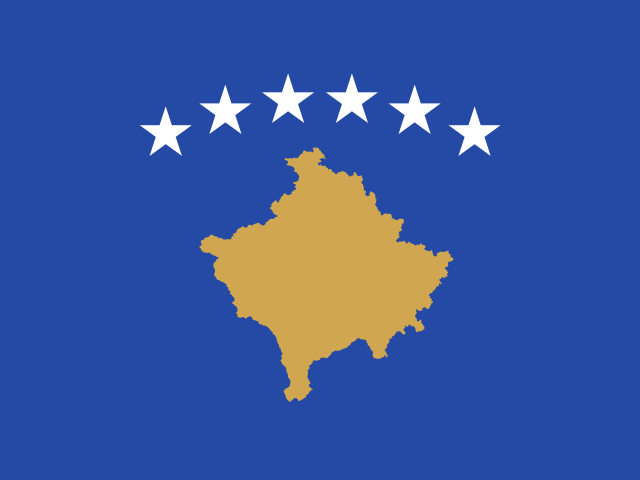 Kosovo
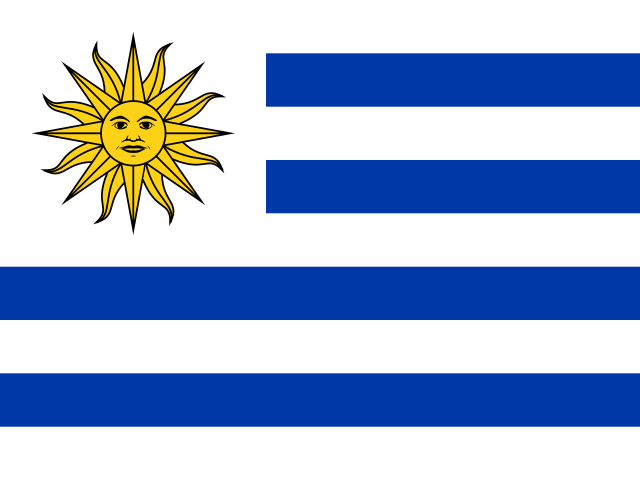 Uruguay