Americas
Flag of the Bahamas
The Bahamas is an archipelago of about 700 islands and 2,400 cays in the Atlantic Ocean north of Cuba, and is the site of Christopher Columbus's first landfall in the Americas on October 12, 1492. Today the Bahamas is one of the Caribbean's most prosperous nations, with tourism and offshore financial services as its main economic pillars. Its turquoise waters, coral reefs, and marine life make it a world-class scuba diving and sailing destination.

- CapitalNassau
- RegionAmericas
- Current flag since1973
- Main coloursBlue, Yellow, Black
- Populationabout 410,000
- Areaabout 14,000 km²
- GeographyIsland nation
- Flags in history2
Population and area are rounded.
What the flag of the Bahamas means
The black triangle represents the unity and determination of the Bahamian people, the aquamarine bands the clear waters around the islands, and the gold band the sun and the sandy beaches. The flag was adopted at independence from Britain in 1973.
More about the flag
The Bahamas is an archipelago of about 700 islands and cays spread across the Atlantic, southeast of Florida. It became independent from Britain on 10 July 1973. Aquamarine is rare on national flags, and here it matches the shallow seas of the Bahama Banks, which are clear enough to be seen from space. The capital, Nassau, is on New Providence island.
How to recognise it
Horizontal blue-gold-blue with a black equilateral triangle at the hoist.
Did you know?
The Bahamas has the third-highest number of Blue Flag beaches in the world.
Easily confused with
The Bahamas' flag is often mixed up with these. Learn to tell them apart:
Flag history of the Bahamas
Every flag that has flown over the Bahamas, from today back through time.
1973–present
Commonwealth of the Bahamas
The Bahamas' flag — aquamarine and gold stripes with a black triangle at the hoist — was designed by Hervis Bain and adopted at independence from Britain on July 10, 1973. The aquamarine represents the surrounding sea; gold the beaches and the sun; black the strength and unity of the Bahamian people. The archipelago of some 700 islands was the site of Christopher Columbus's first landing in the Americas in 1492, on the island of Guanahani (San Salvador).
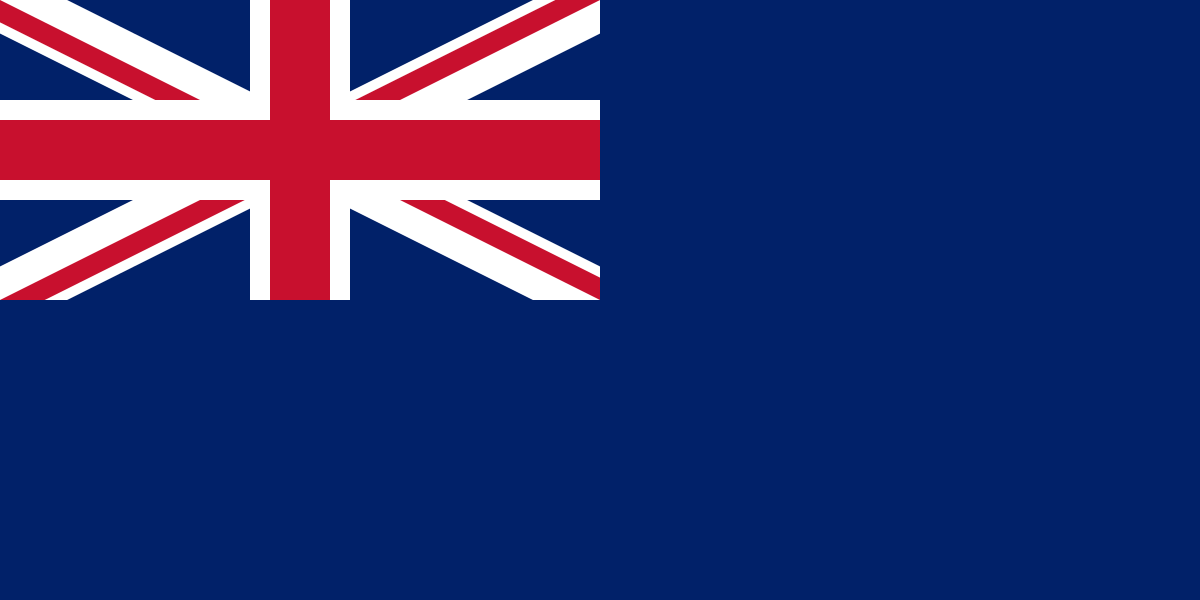
1718–1973
British Bahamas (colonial era)
The Bahamas was a base for pirates (including Blackbeard and Charles Vane) until the British Crown asserted control in 1718. During American Prohibition (1920–1933) the islands became a transshipment point for rum, giving the Bahamas unexpected economic prosperity. The islands were of strategic importance during World War II, with the Duke of Windsor serving as Governor. Independence came in 1973 after a peaceful transition.
Other flags in blue, yellow and black
One other national flag uses the same main colours as the Bahamas'.
Play Globalio and learn the Bahamas' flag
 Trinidad and Tobago
 Barbados