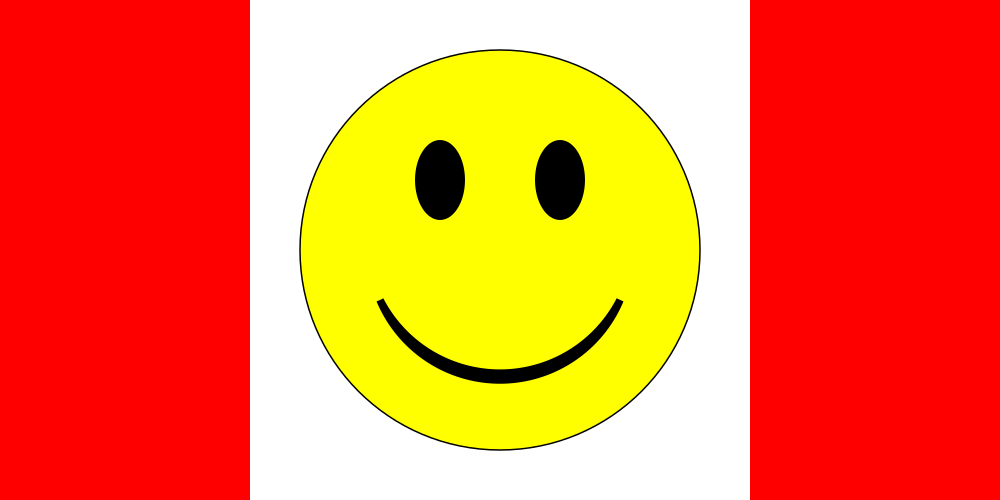
Aerican Empire
A whimsical micronation founded in 1987 that claims a piece of Mars and Pluto; its flag bears a giant yellow smiley face.
Flags of self-declared micronations, from sea forts to desert "kingdoms". 58 flags, each with its story.
A whimsical micronation founded in 1987 that claims a piece of Mars and Pluto; its flag bears a giant yellow smiley face.
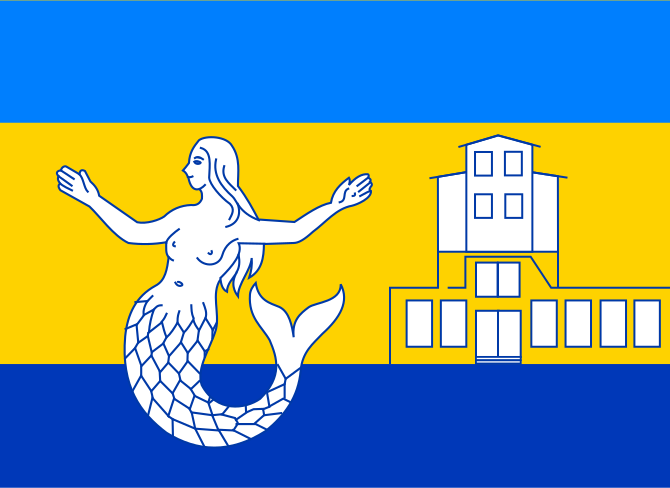
A beachside micronation on the Israeli coast founded by Eli Avivi in the 1970s.
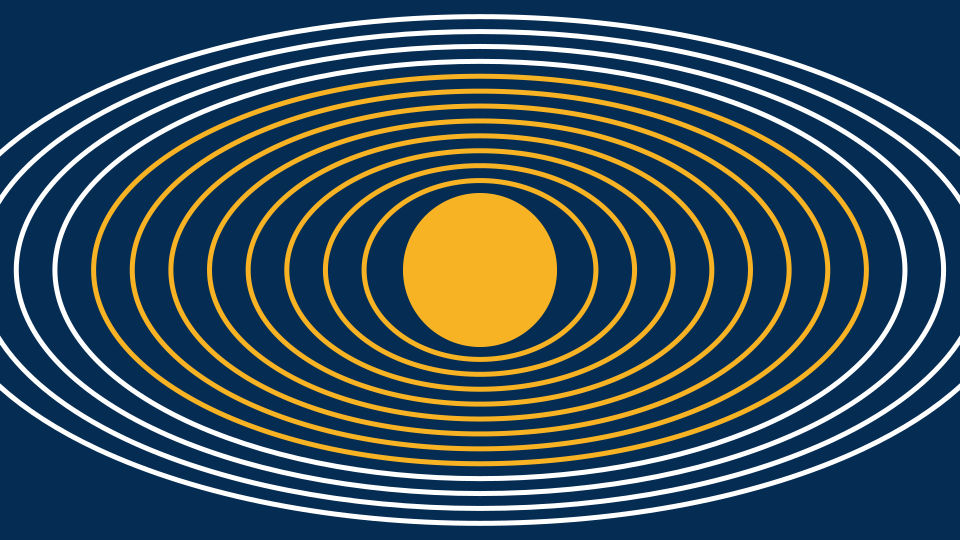
A proposed 'space nation' founded in 2016 that has launched a small satellite and claims hundreds of thousands of online citizens.

Key West mock-seceded in 1982 to protest a US Border Patrol roadblock, adopting the motto 'We Seceded Where Others Failed'.
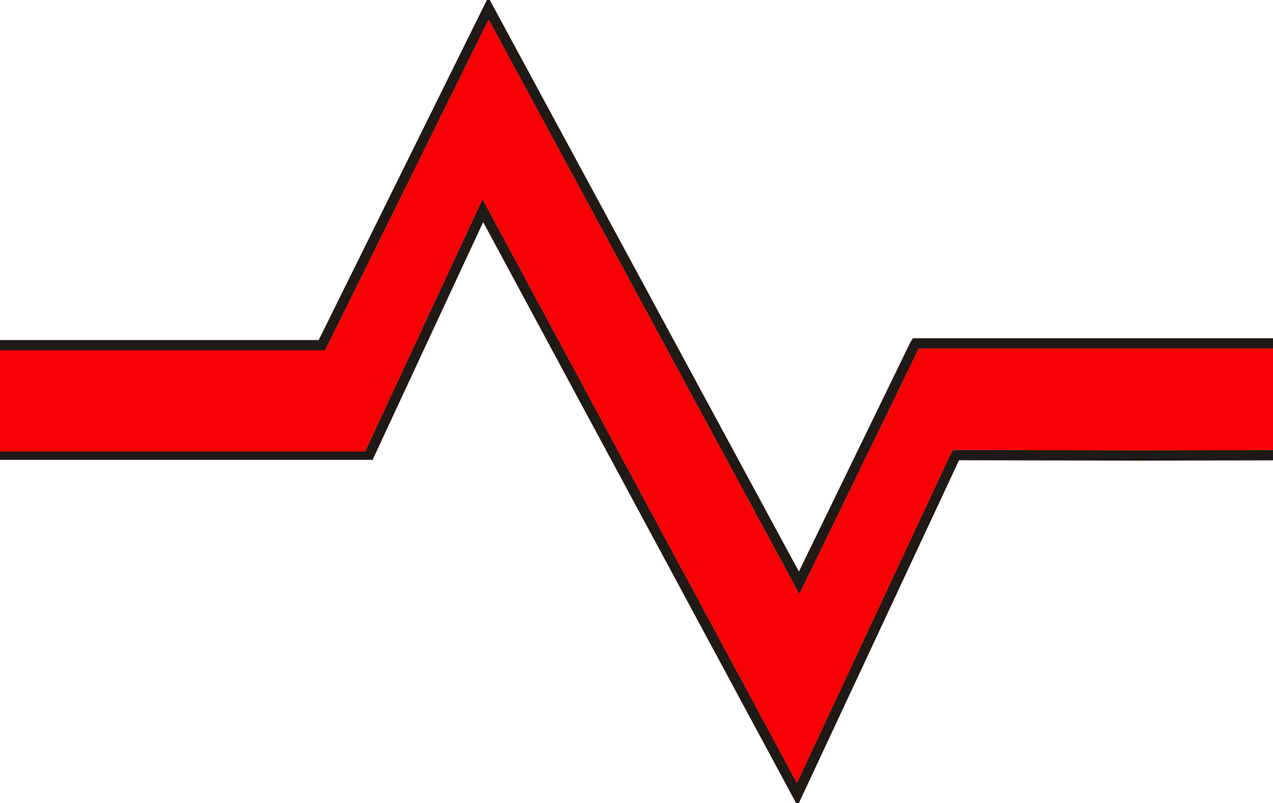
A conceptual art-project nation claiming all border zones and 'interstitial' spaces — and counting every dead person as a citizen.
An Australian-based micronation promoting global citizenship, whose flag bears a lemniscate (infinity) symbol.
Founded in a Sutton house in 2008, it styles itself a successor to the Roman Empire and grows by annexing members' properties worldwide.
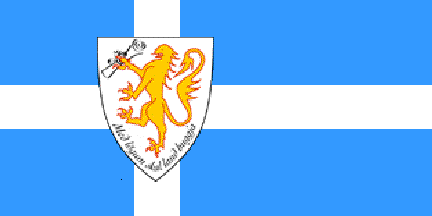
A tiny Shetland island declared a Crown dependency by Stuart Hill in 2008.
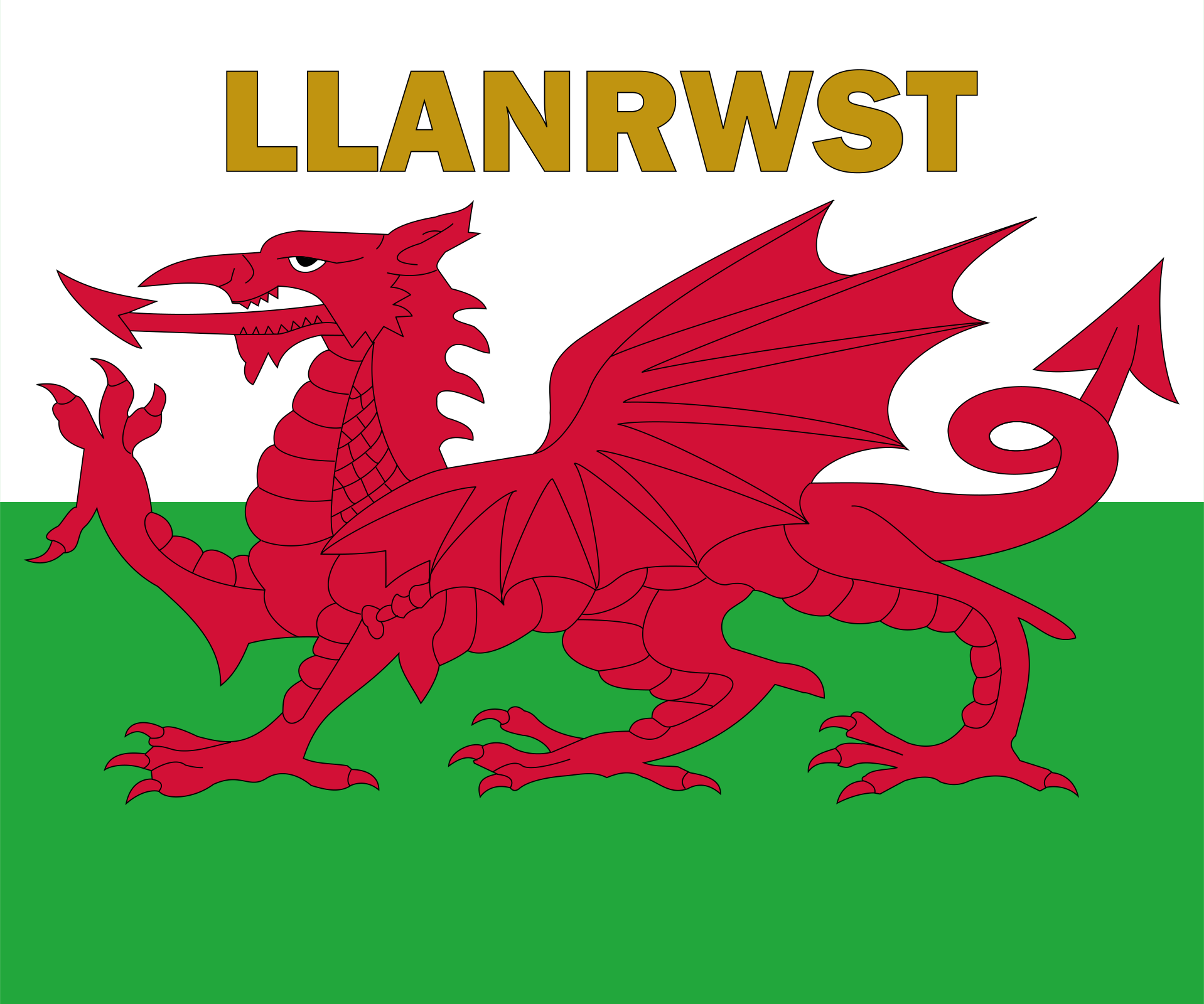
A Welsh town declared a 'free borough' by Prince Llywelyn ap Gruffudd in 1276; it long claimed to lie outside the Diocese of St Asaph.
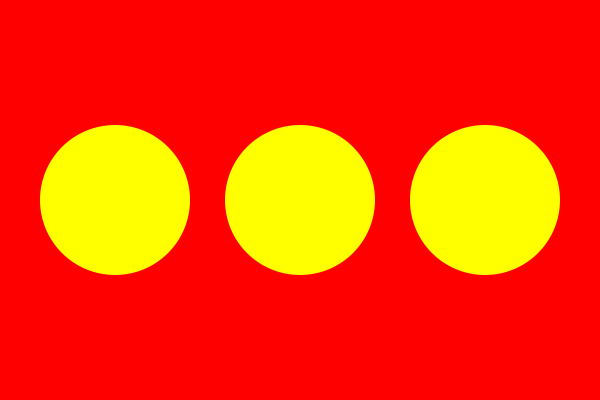
A self-governing squatter commune in Copenhagen since 1971; its red flag's three yellow dots are the dots over the i's in 'Christiania'.
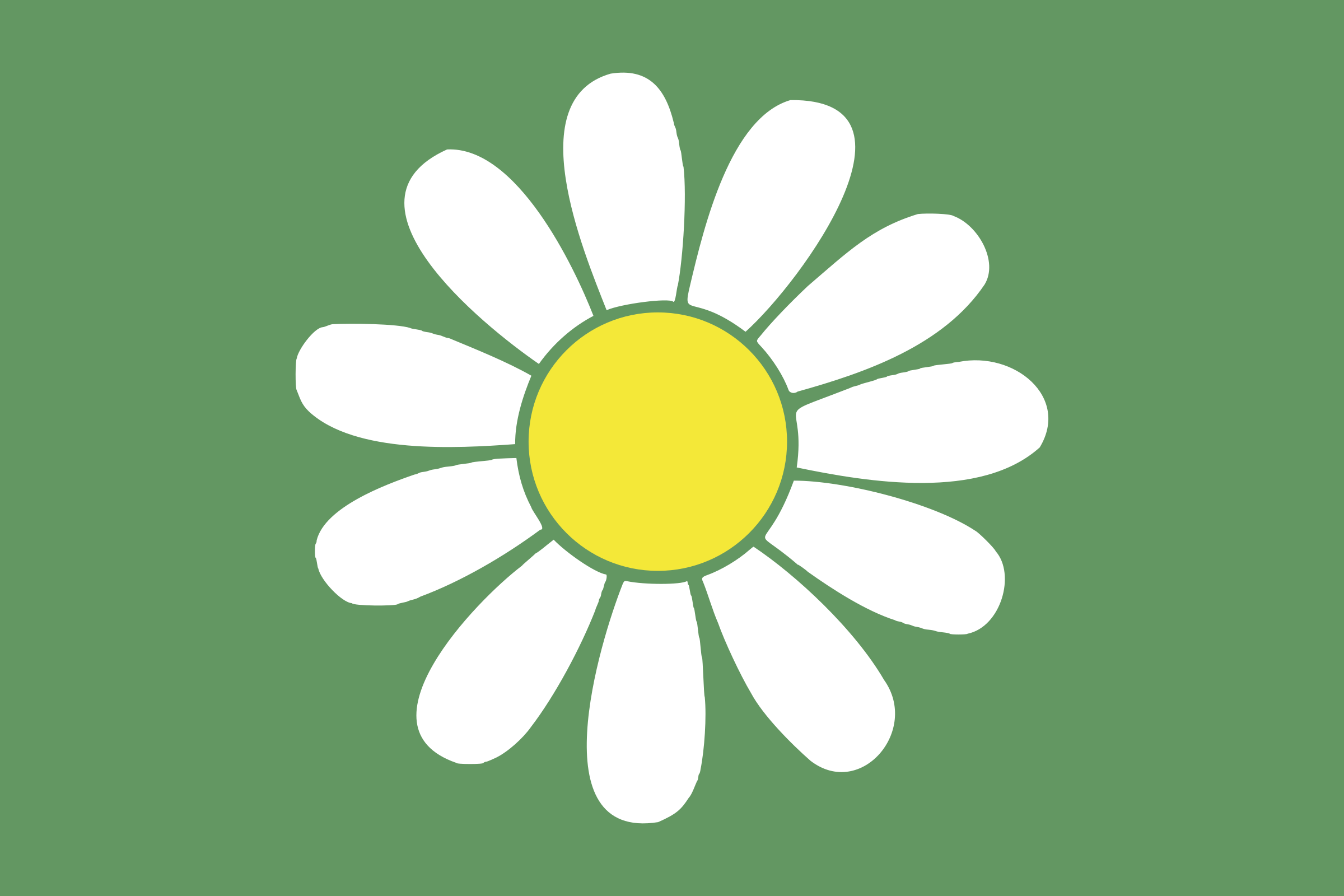
A community of Notting Hill squatters facing eviction in 1977 voted to secede, naming writers and musicians among their ministers.
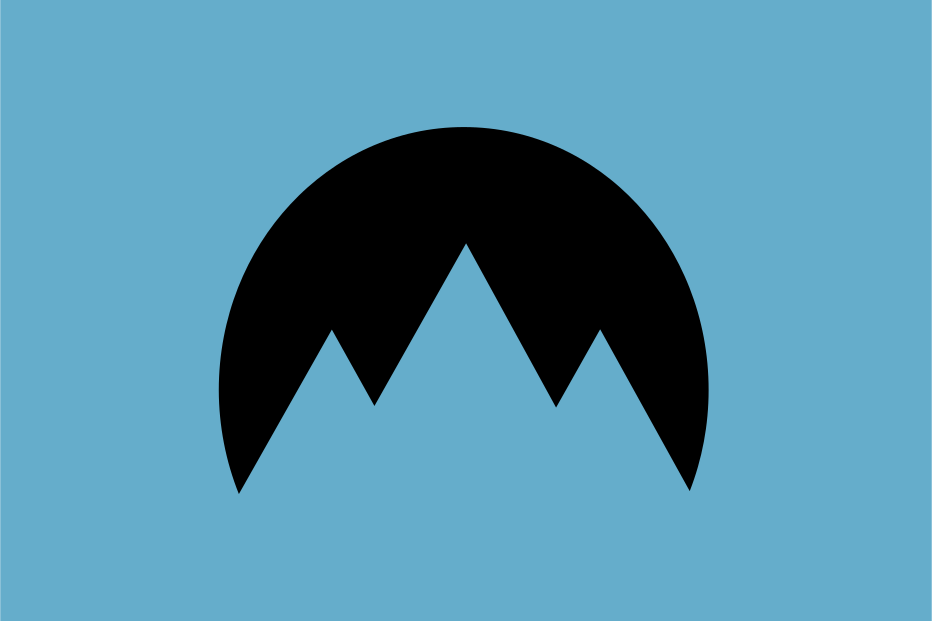
A 2014 Greenpeace stunt-state planted on an Andean glacier to highlight a legal gap in Chile's protection of its glaciers.
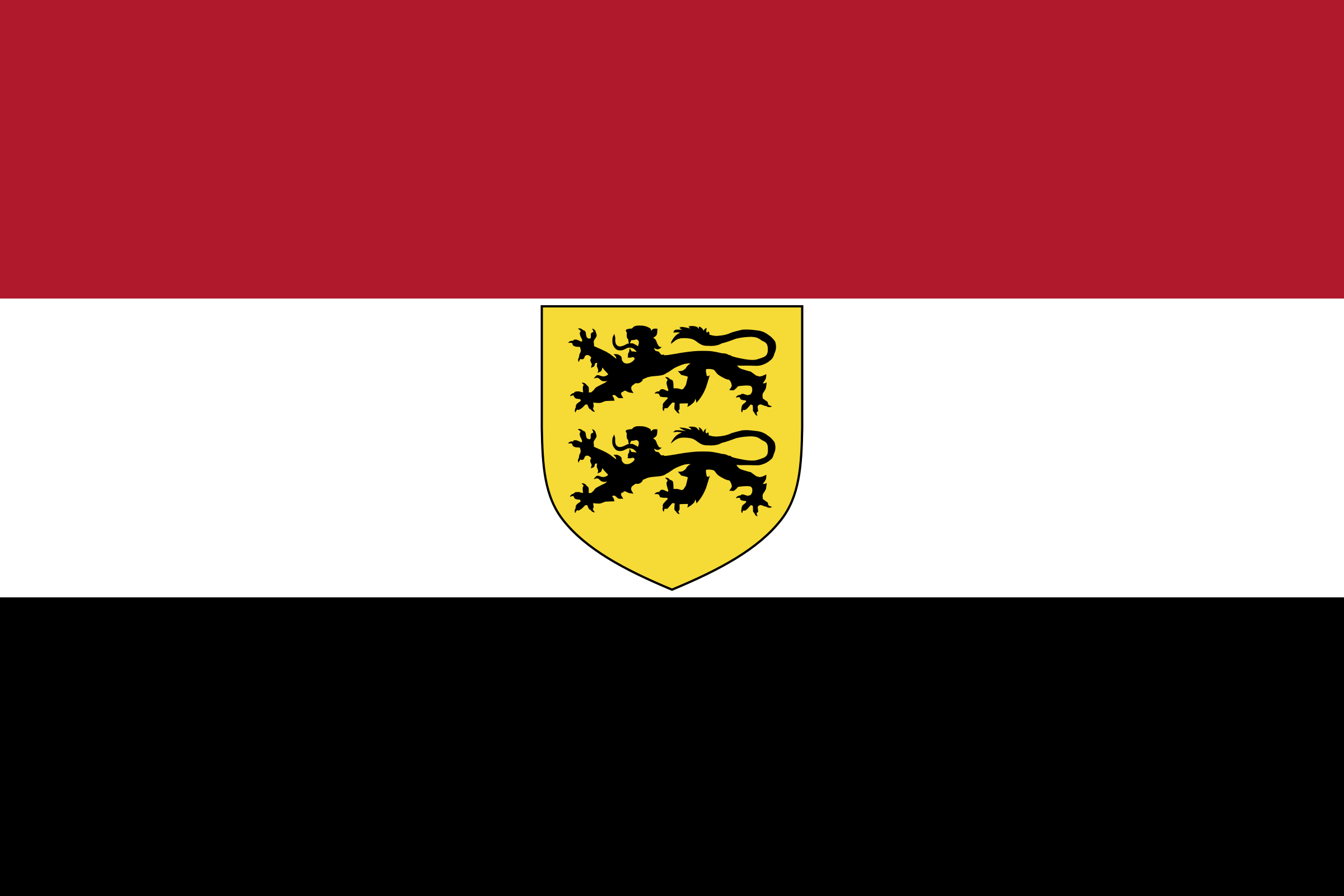
Claims five uninhabited Antarctic islands and campaigns on climate change — uniquely, it wants NO one to live on its melting territory.
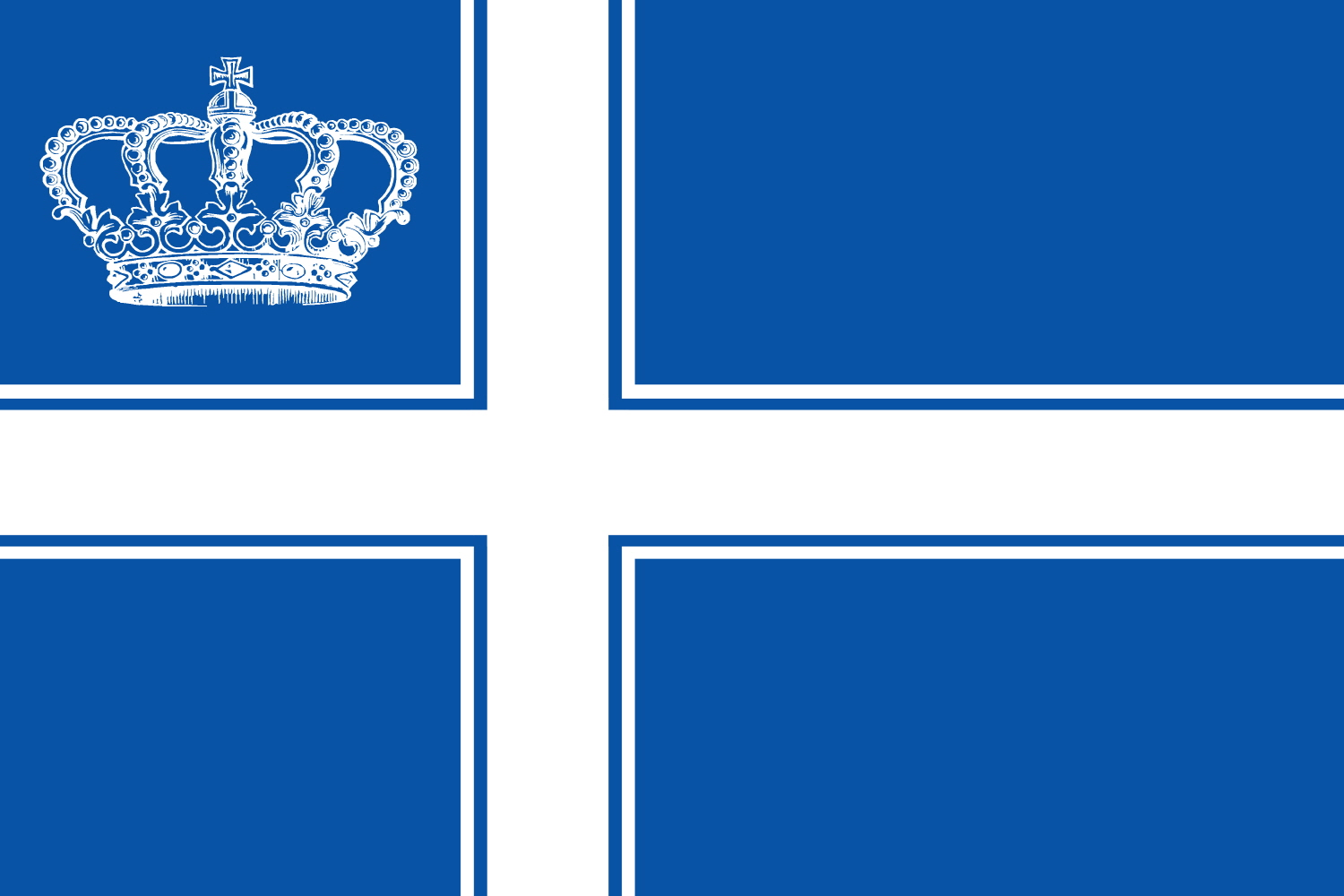
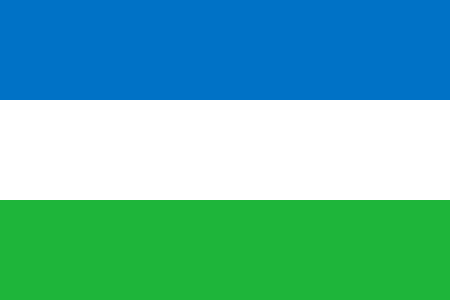
Claims Marie Byrd Land — the one slice of Antarctica no country claims. Its blue-and-white flag now doubles as a vehicle for climate-change awareness.
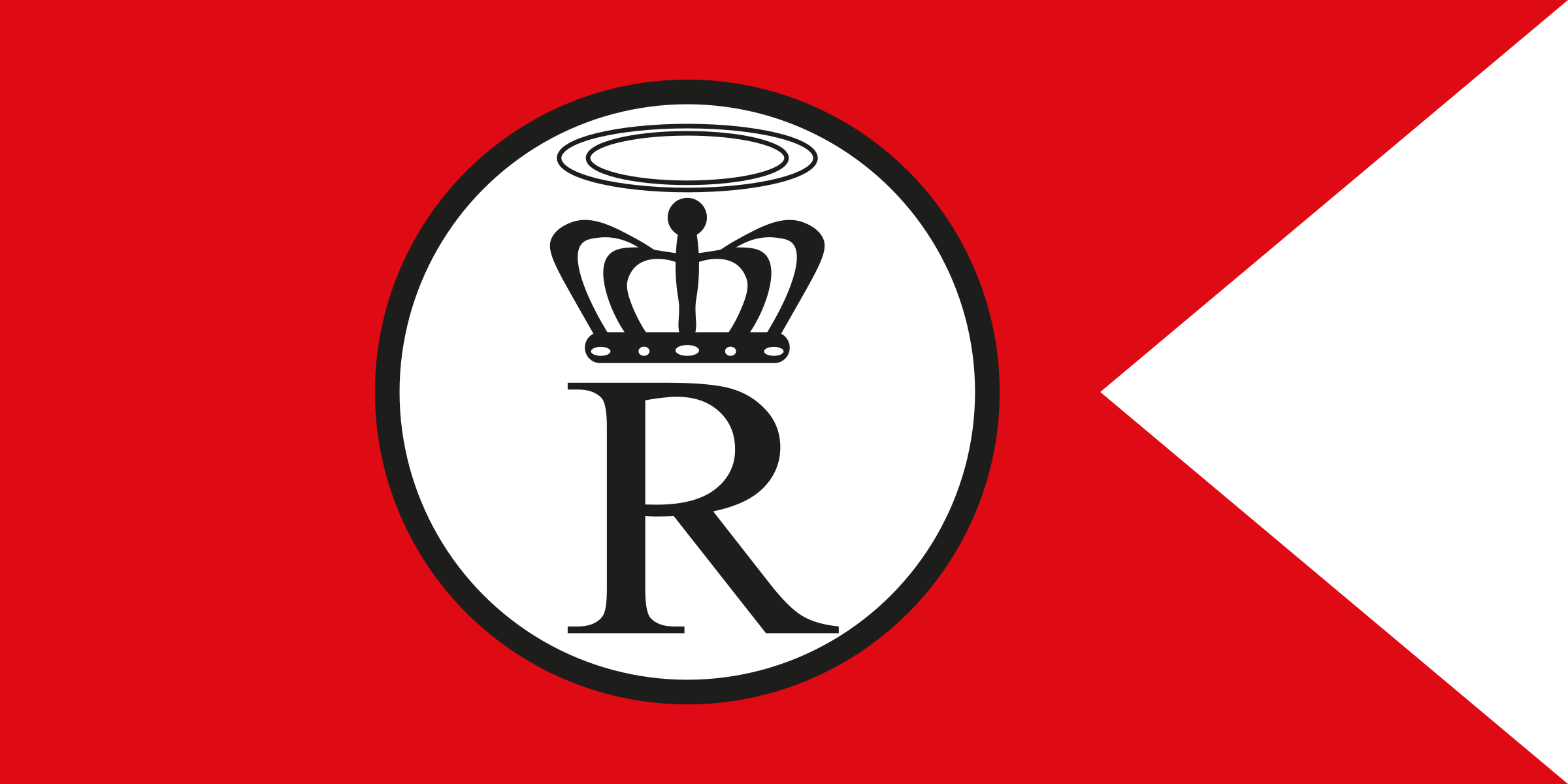
Created in 1997 by Brazilian law students as a parody of the French overseas department of Réunion.
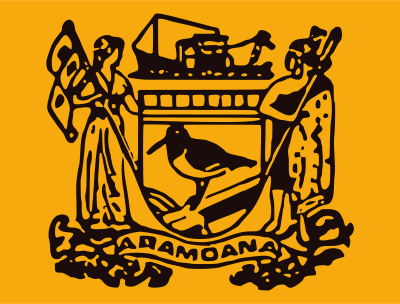
A small New Zealand community that declared independence in 1980 to protest a planned aluminium smelter on nearby land.
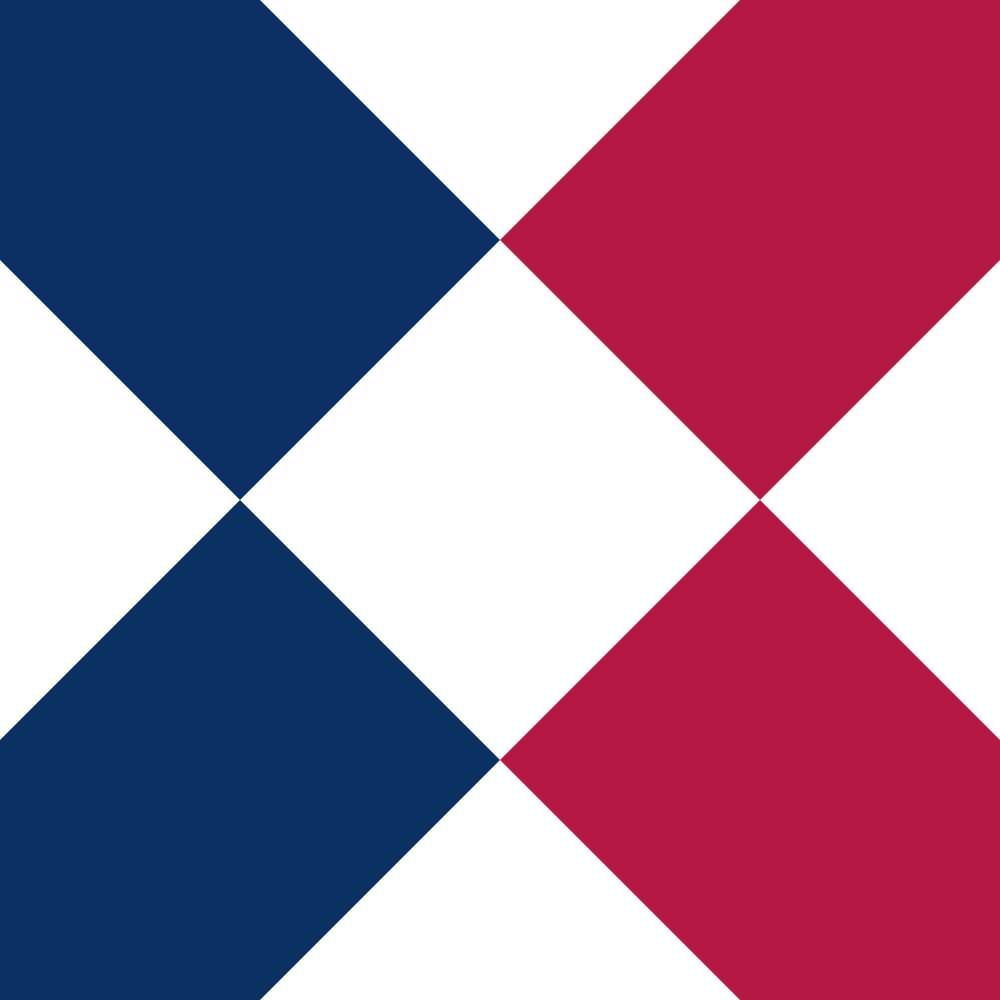
Jonathan Lambert proclaimed himself ruler of remote Tristan da Cunha in 1811, before drowning months later. Britain annexed the islands soon after.
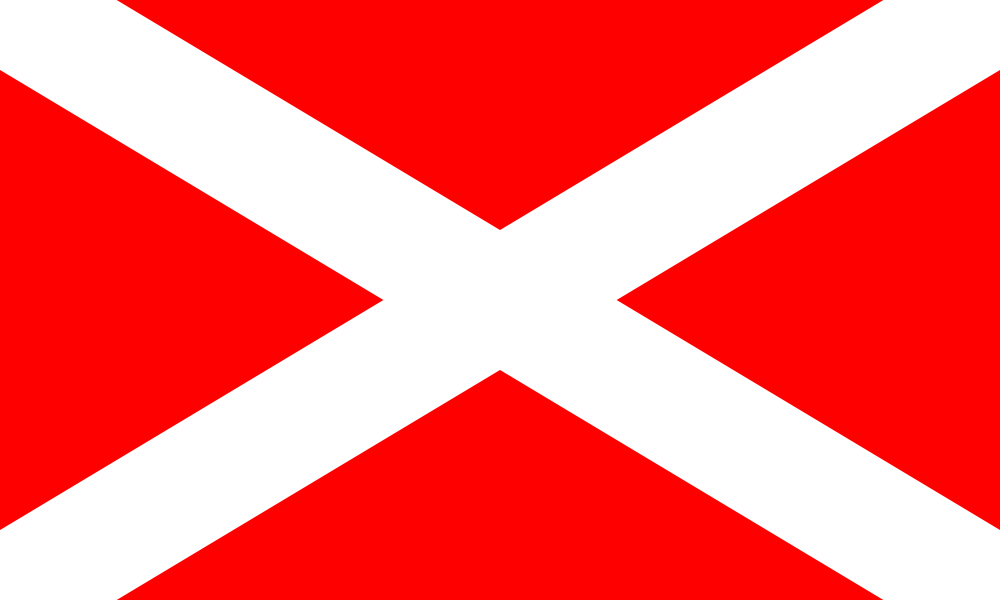
Danish schoolteachers bought a tiny island for a summer camp in 1944 and proclaimed a kingdom, with playful laws — Robinson Crusoe is a banned book.
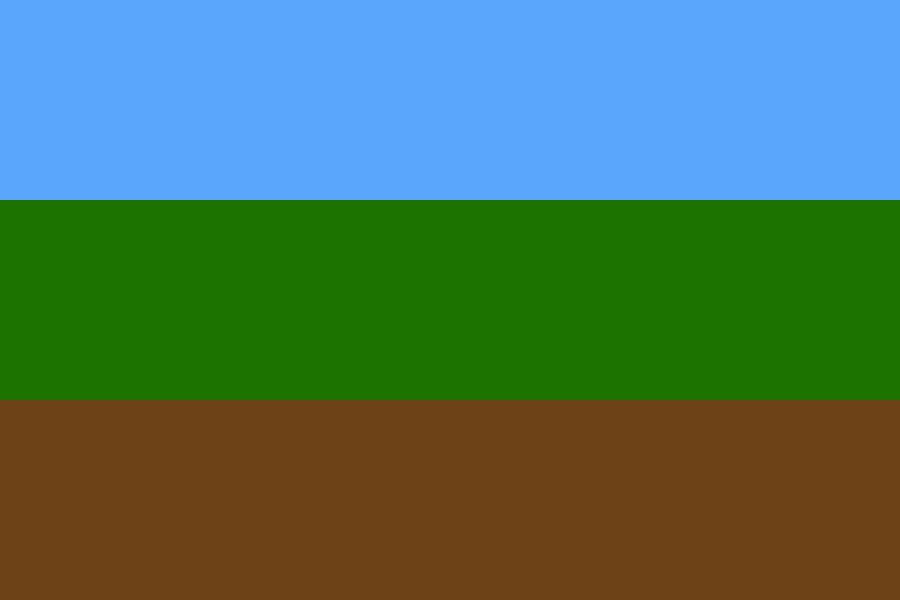
A tiny uninhabited Caribbean island whose whimsical 'kingship' has been passed down through a line of writers and poets since the 1860s.
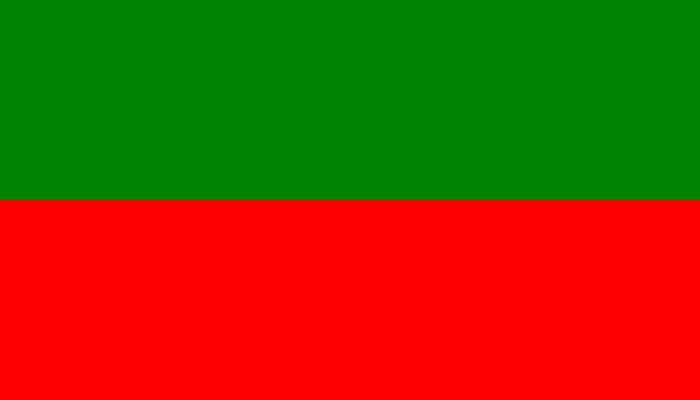
Founded by a 14-year-old in his Milwaukee bedroom in 1979, Talossa even invented its own elaborate constructed language.
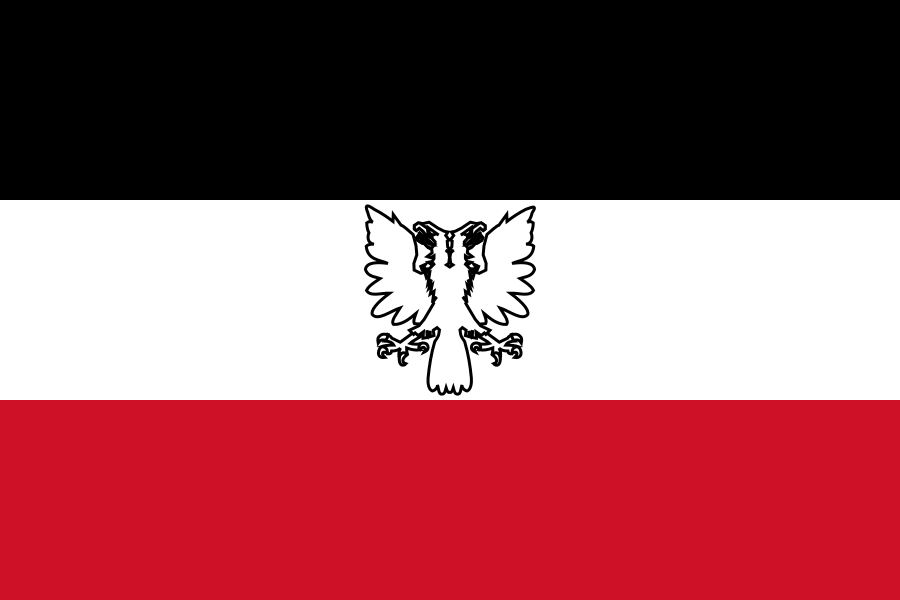
A Manitoba news cameraman founded Vikesland in 2005 to make a documentary about micronations.

A green Nordic cross on green — a deliberately 'invisible' flag for the Swedish art micronation founded in 1996 by sculptor Lars Vilks around his driftwood works.
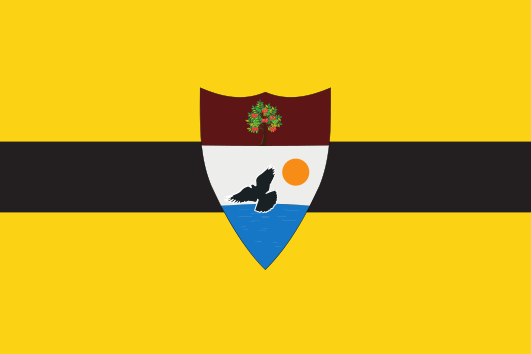
A libertarian micronation proclaimed in 2015 on a disputed scrap of land between Croatia and Serbia that neither country claims.
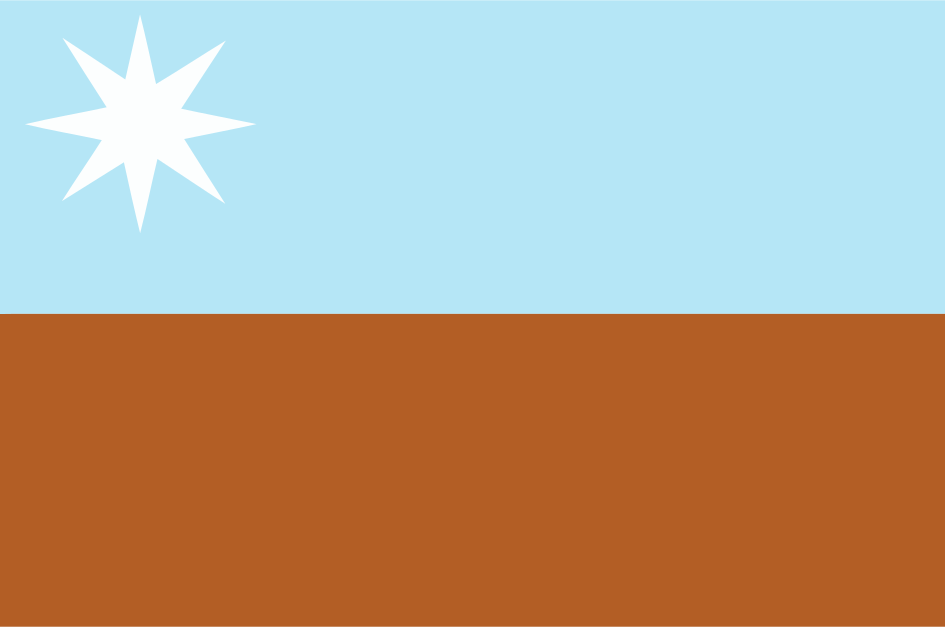
Declared in 2013 by the Murrawarri Aboriginal people on the New South Wales–Queensland border, asserting they never ceded sovereignty to the Crown.
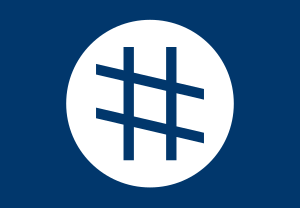
Founded in 1949 by James Mangan, who claimed all of outer space and formally 'forbade' the nuclear powers from testing weapons there.
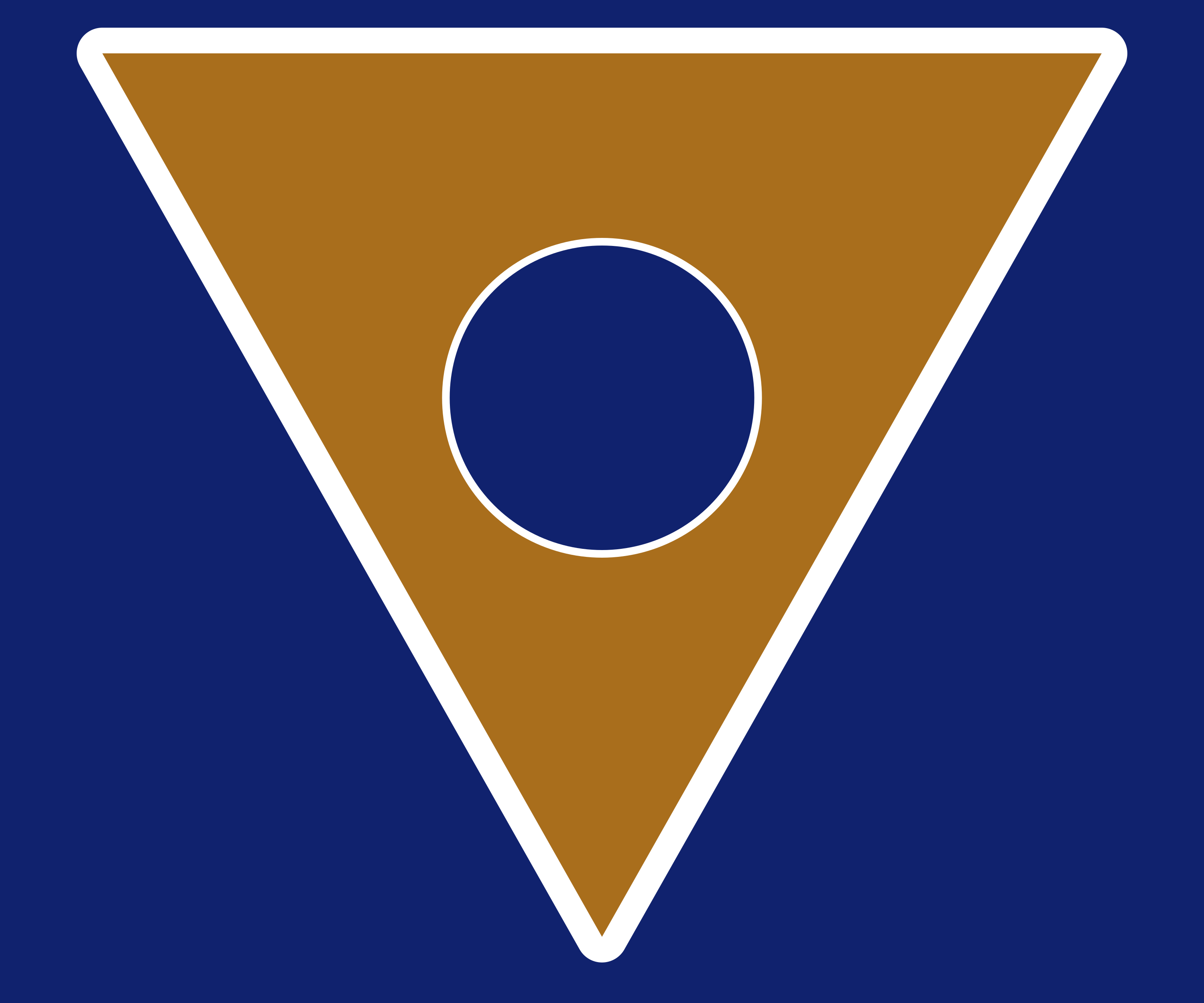
Ernest Hemingway's brother Leicester anchored a bamboo raft off Jamaica in 1964 and declared it a nation for marine research, until a storm destroyed it.
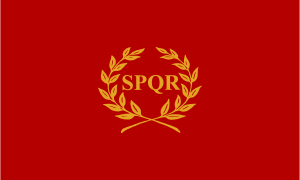
An organisation reviving classical Roman religion, culture and coinage, often counted among the world's micronations.
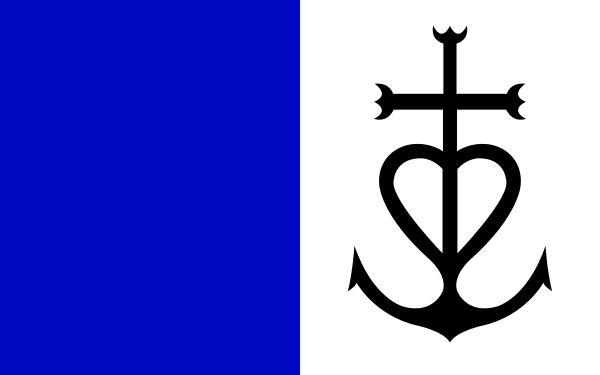
The walled French city declared itself a principality in 2010 as a publicity stunt, citing a local legend of Louis IX ennobling a squire.
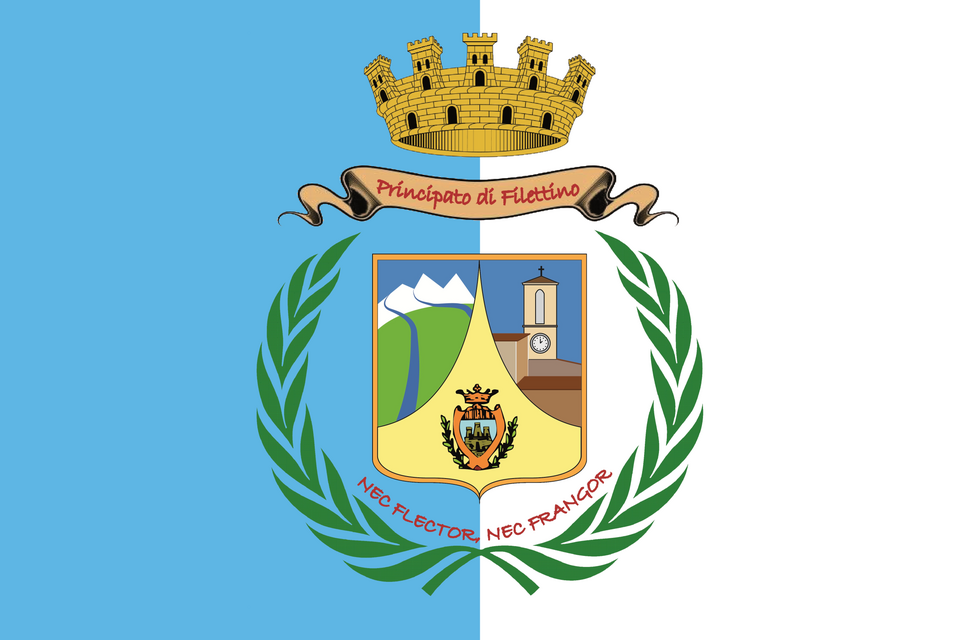
An Italian village that declared itself a principality in 2011 to protest a merger.
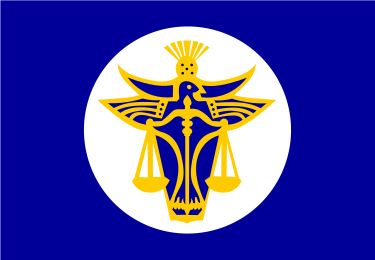
An Australian farm that 'seceded' in 1970 over a wheat-quota dispute, running as a principality for 50 years before closing in 2020.
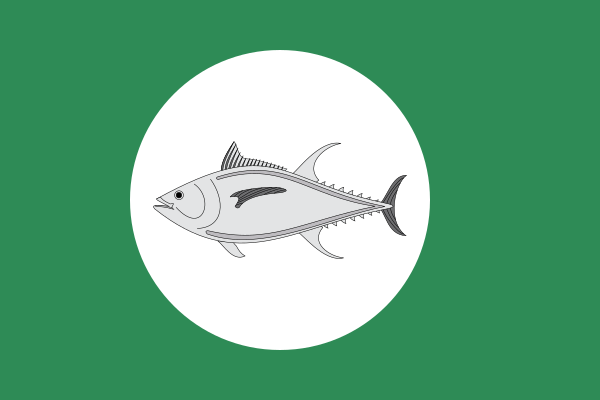
A rocky Nova Scotian island bought by a tuna fisherman in 1948, who proclaimed a 'principality' where citizens had the right to lie about their catches.
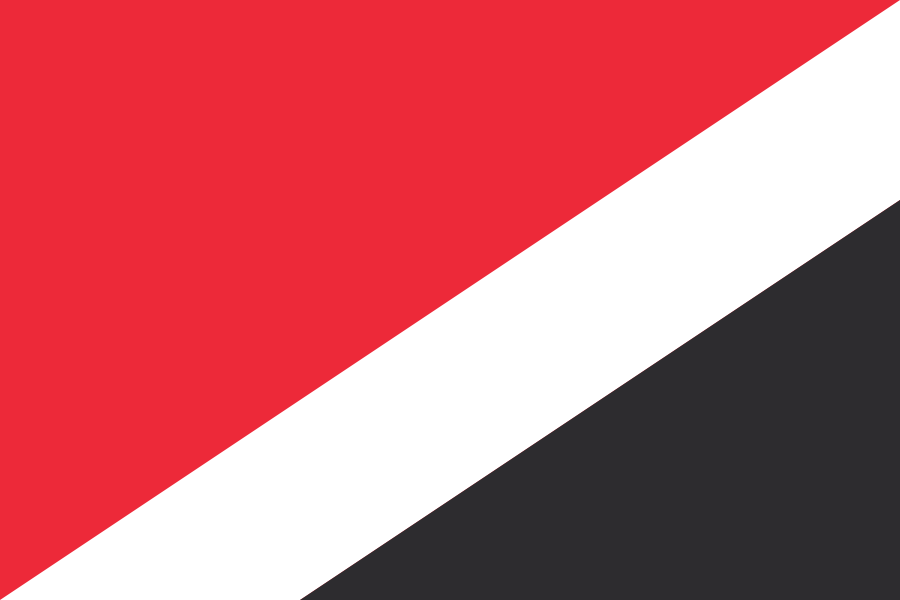
A WWII anti-aircraft platform off the English coast, declared a principality in 1967 and still defended by the Bates family.
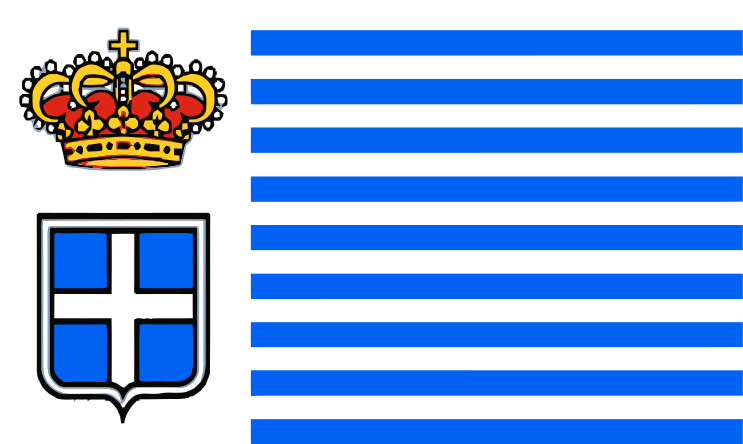
A Ligurian village that claims it was never legally part of unified Italy, electing its own prince since the 1960s.
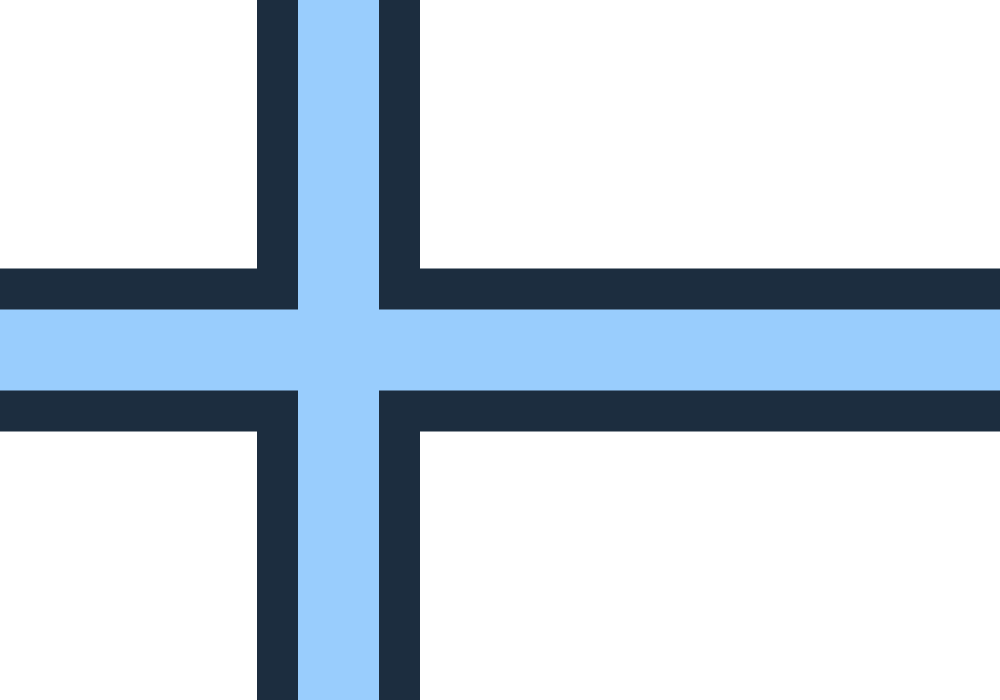
A New South Wales family unable to afford their taxes seceded from Australia in 2003.
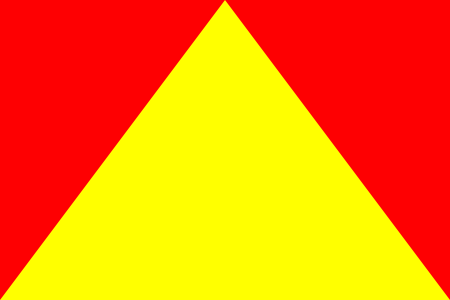
An uninhabited South Atlantic island claimed in 1893 by adventurer James Harden-Hickey, who styled himself 'James I' before the scheme collapsed.
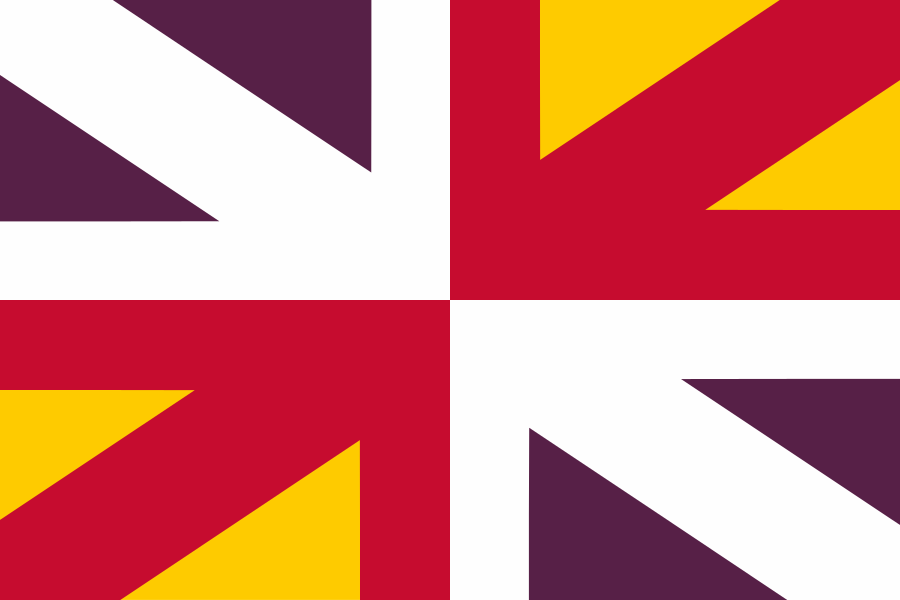
A Sydney household that declared itself a principality in 2004 after a 10-year dispute with the council over a driveway — its 'prince' was a sculptor.
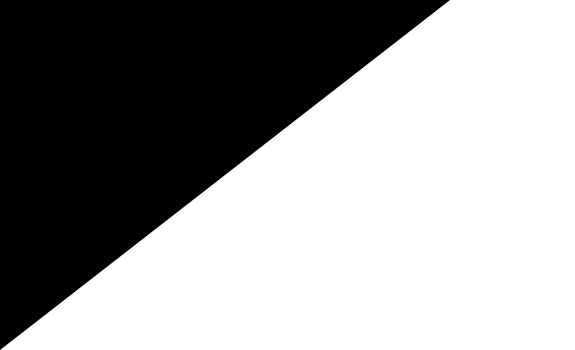
An Italian village left off a 1440 border treaty by mistake, becoming an accidental tax-free republic for 386 years until it was absorbed in 1826.
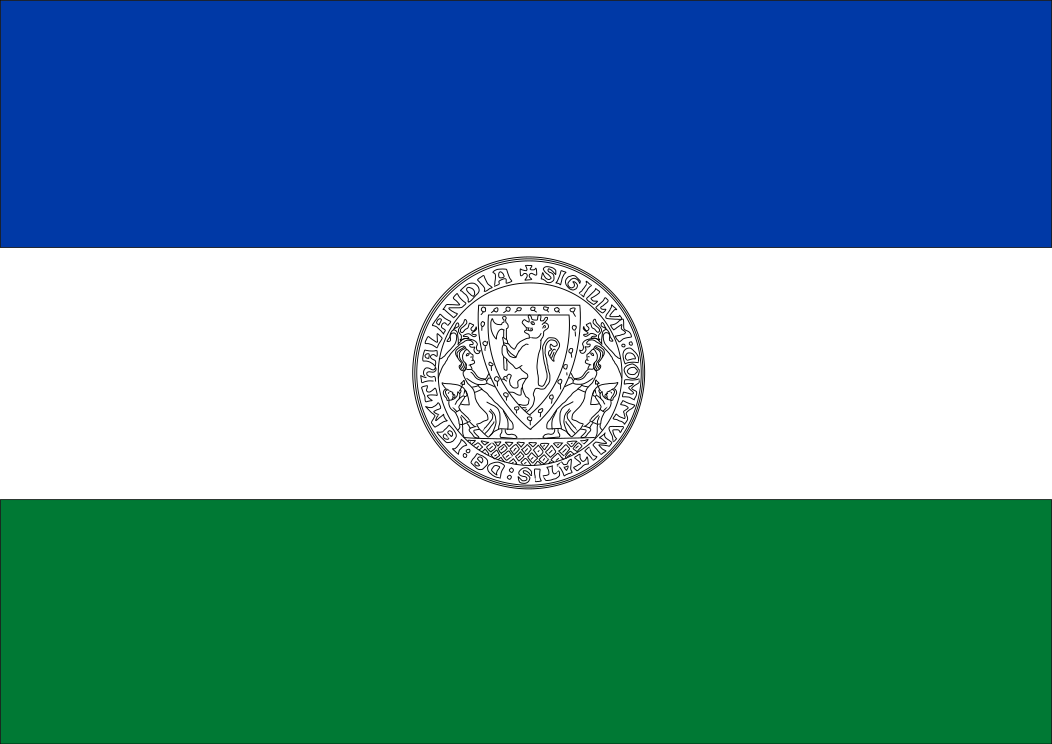
A Swedish cultural micronation basing its claim on Jämtland's autonomy before 1178, celebrated with an annual festival.
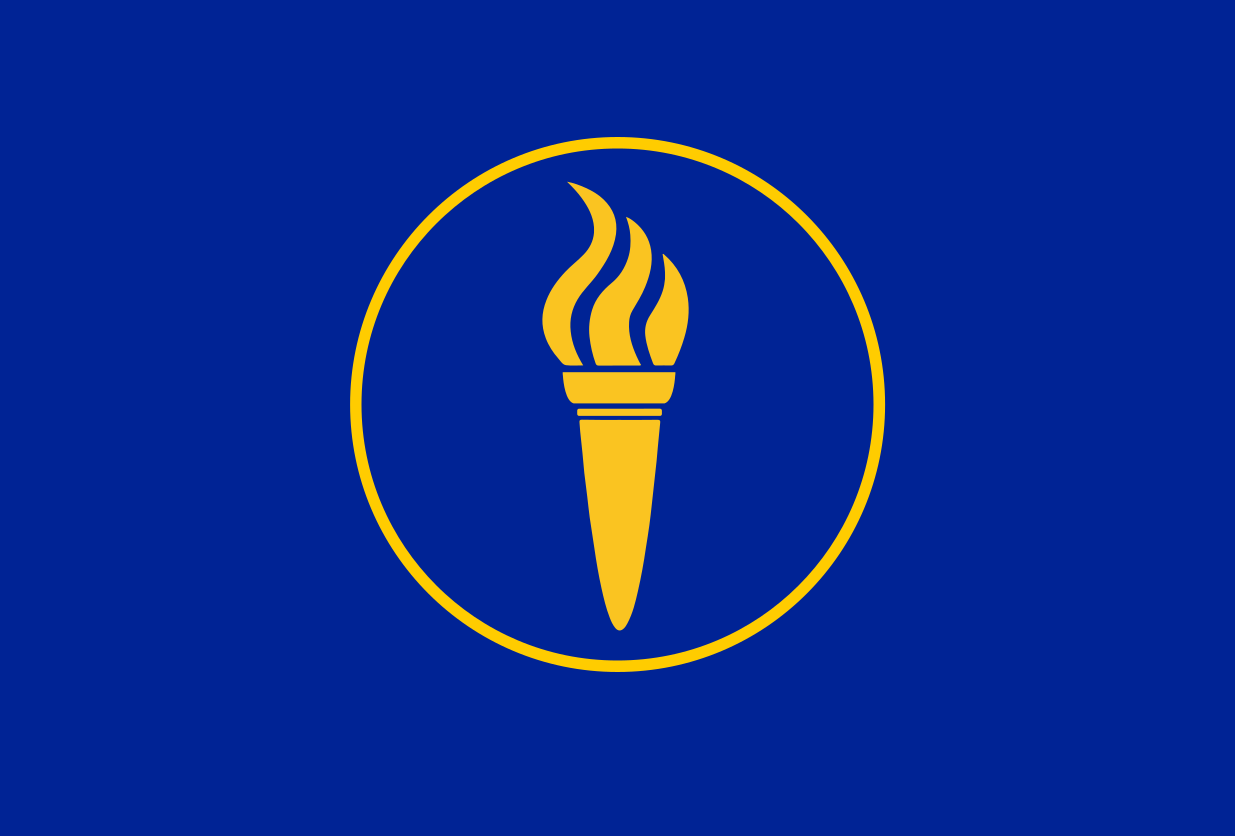
A torch on blue for the 1972 libertarian project to build a nation on reclaimed reefs near Tonga — promptly annexed by Tonga.
A tongue-in-cheek micronation in the Nevada desert led by 'President' Kevin Baugh, with its own currency, time zone, and tiny navy.
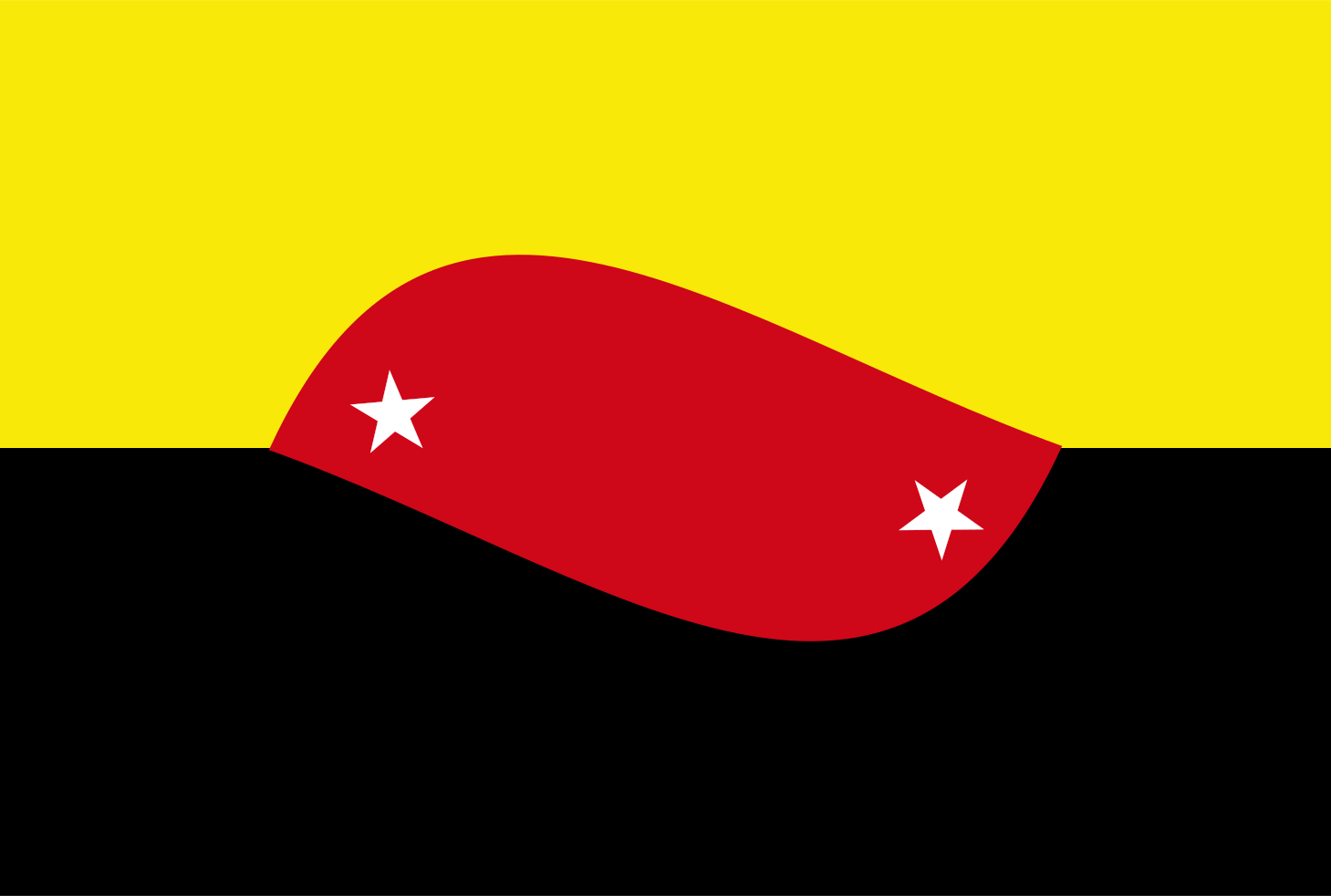
A long-running claim over the disputed Spratly Islands, also known as the Kingdom of Humanity, dating back to a 19th-century British captain.
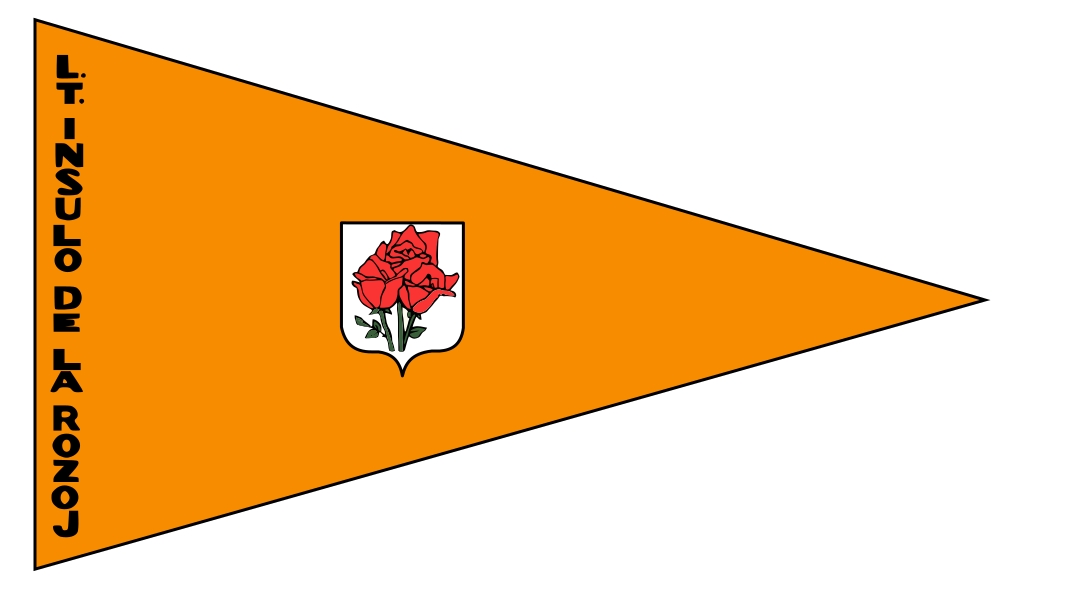
A 1968 artificial platform in the Adriatic that declared independence in Esperanto, before the Italian navy demolished it months later.
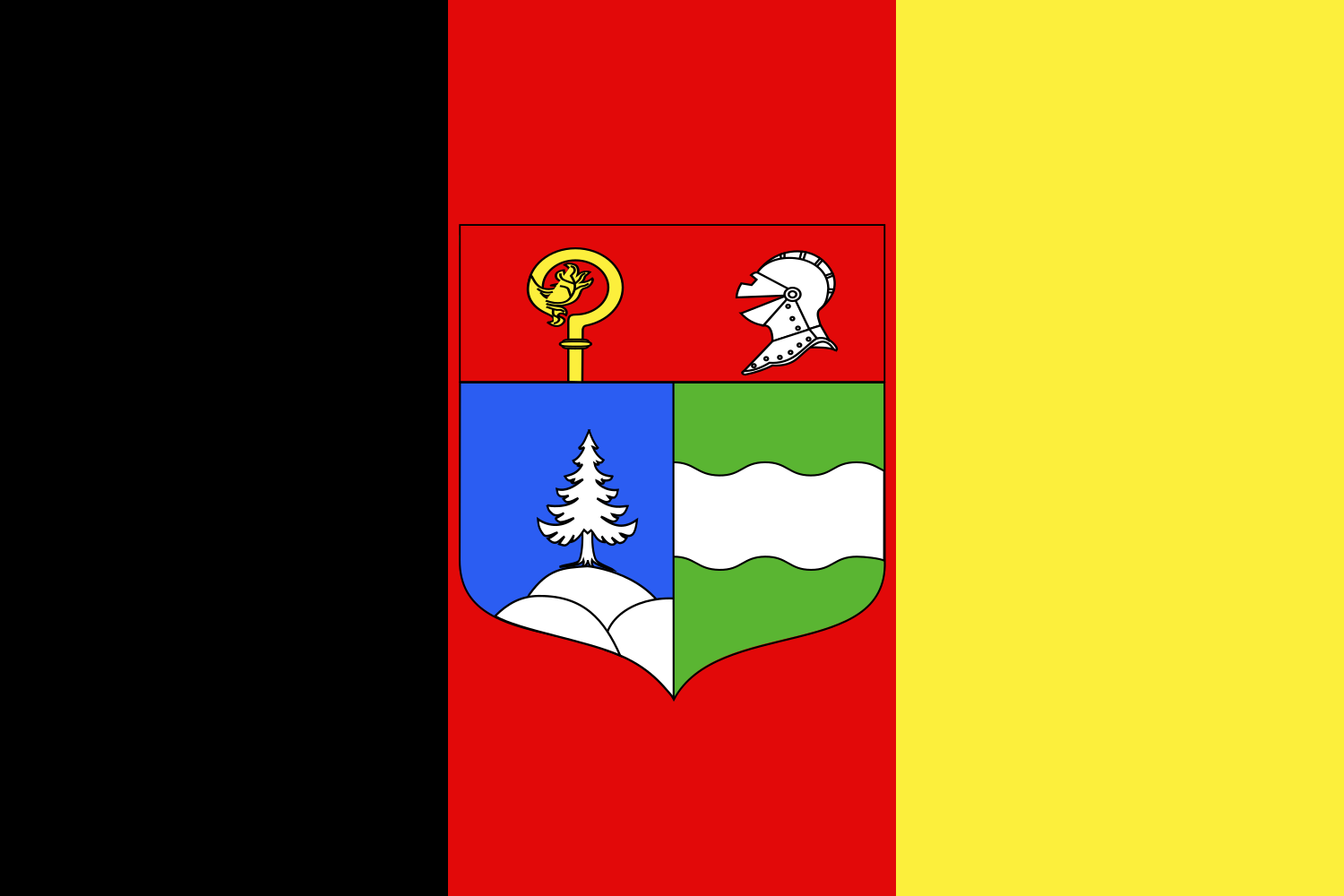
A French valley that became a joke republic in 1947 when a hotelier improvised it for a visiting prefect, who appointed him president. It spans 11 communes.
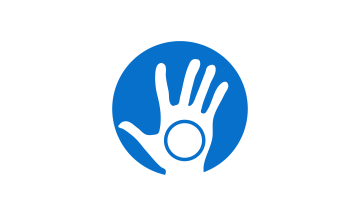
A bohemian artists' 'republic' in a Vilnius neighbourhood, declared on 1 April 1997. Its flag shows a hand with a hole in the palm — 'you can't take anything with you.'
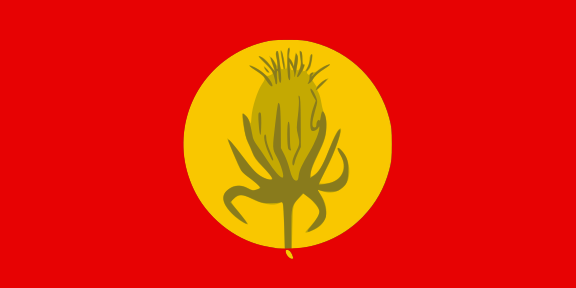
Days after Macedonia left Yugoslavia in 1991, this village voted for its own independence — and eventually won its own municipality.
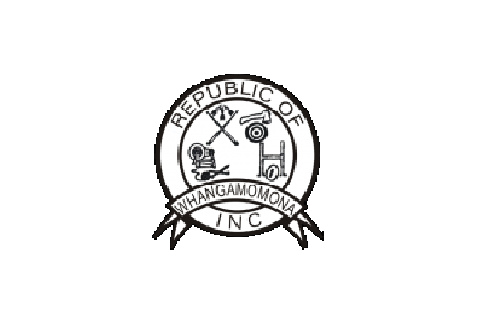
A New Zealand village that declared itself a republic in 1989 after a council boundary change; it has elected a goat and a poodle as president.
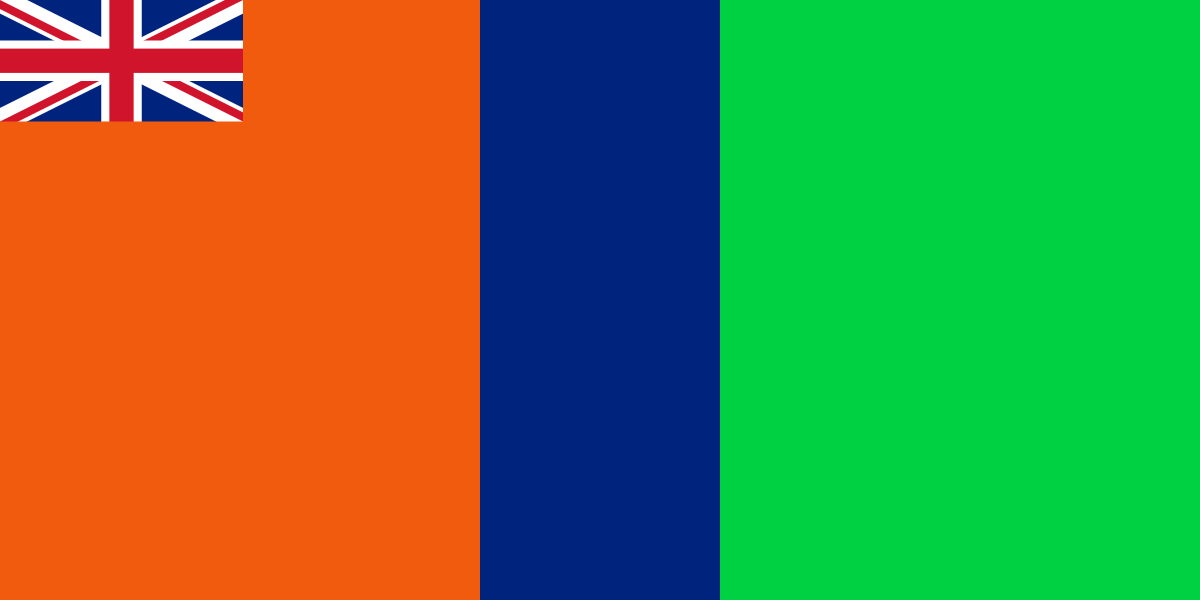
A Briton declared his coastal property in what was then Tanganyika a sultanate in 1959, proclaiming himself sultan.
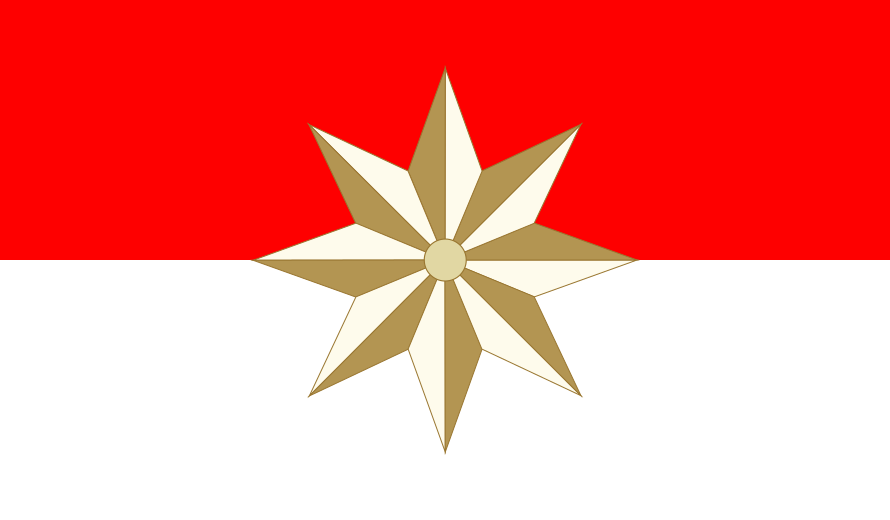
An Indonesian micronation whose founder claimed to succeed Alexander the Great and rule from Australia to Korea; its leaders were jailed for spreading false information.
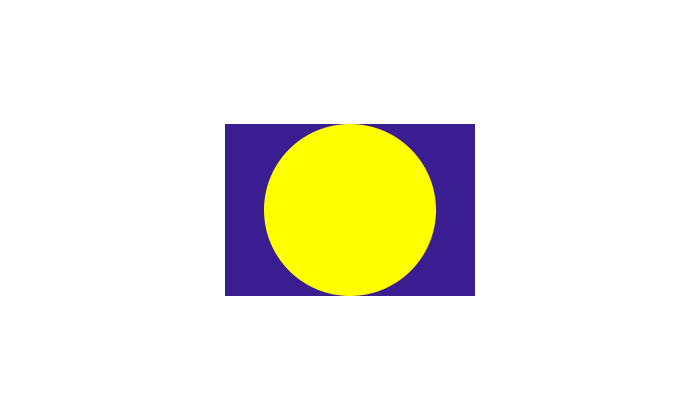
One of the first 'countries' to exist purely online, founded in 2008.
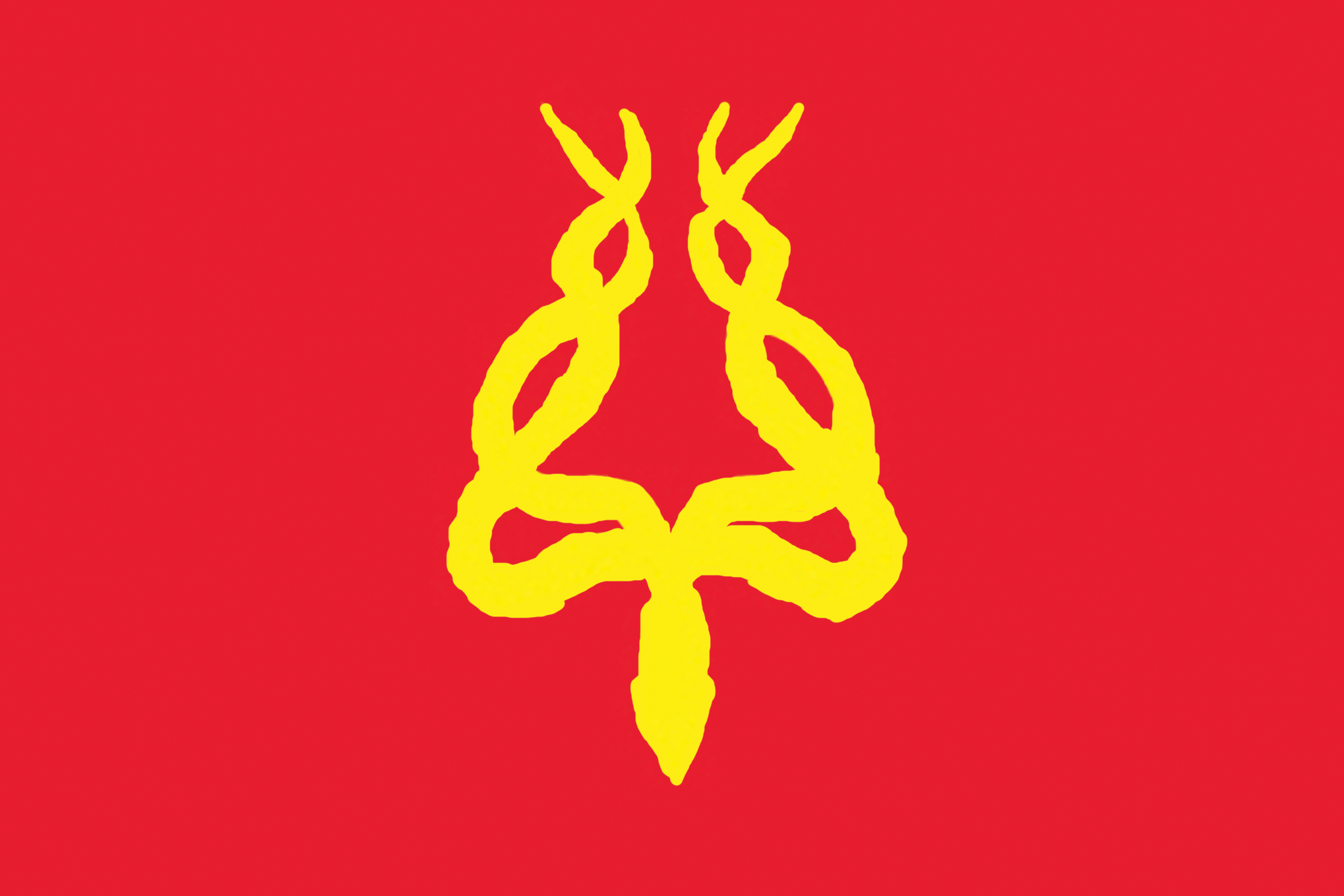
An artist's micronation on a barren two-acre plot in the Utah desert, complete with border guards, monuments and passports.
A notorious vehicle for financial fraud that claims several Pacific islands and a slice of Antarctica's Marie Byrd Land.
Some 5,000 activists built a protest camp and declared a micronation in 1980 at a proposed nuclear-waste site in Germany, before being evicted 32 days later.
An Australian micronation that exists mainly as a micronational bank; its founder was cleared of wrongdoing after several lawsuits.
An Indonesian micronation (2018–2020) whose founder claimed a 500-year-old pact gave him dominion over the Earth — later admitting it was a fraud.
Founded as a joke in Moravian Wallachia (Czech Republic) in 1997; a leadership dispute later ended up in a Czech court.
College students envisioned a libertarian state (1997–2004) but never acquired territory beyond the founder's home in Boston.
A South Australian monarchist declared his farm an independent province loyal to the Crown (1976–c.2000), alarmed by talk of Australia becoming a republic.
Formed in Queensland by the Yidiny people as part of the Australian Indigenous Sovereignty movement.