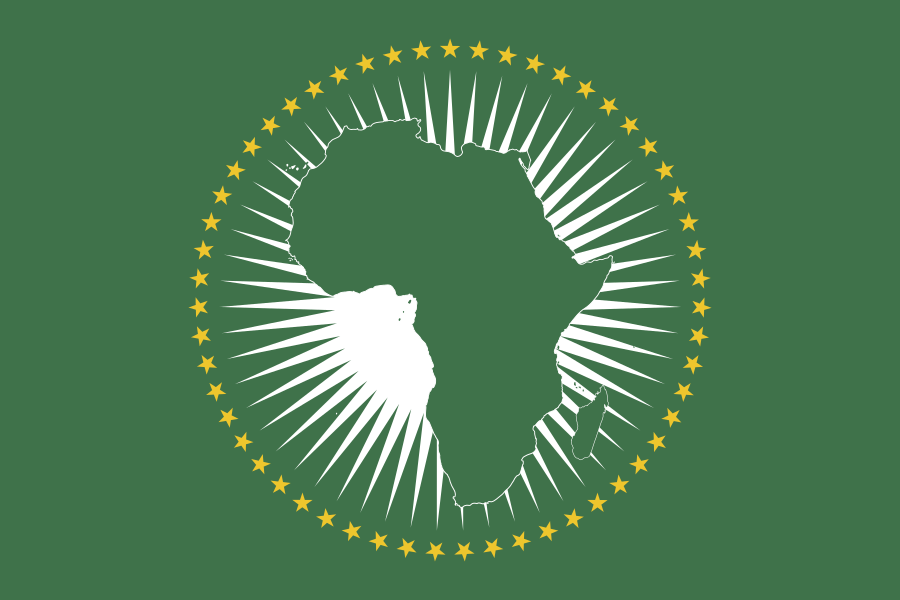
African Union
A gold map of Africa ringed by 55 stars (one per member) on green — flag of the African Union, adopted 2010.
Flags of movements, causes, organisations and ideas, from political symbols to international bodies. 42 flags, each with its story.
A gold map of Africa ringed by 55 stars (one per member) on green — flag of the African Union, adopted 2010.
A diagonal black-and-gold split: black for anarchism, gold for the free market. A staple of online libertarian iconography.

The diagonal black-and-red flag of anarcho-communism and anarcho-syndicalism: black for anarchism, red for the labor and socialist movement.

A diagonally split red-and-black flag — red for the labour movement, black for anarchism.
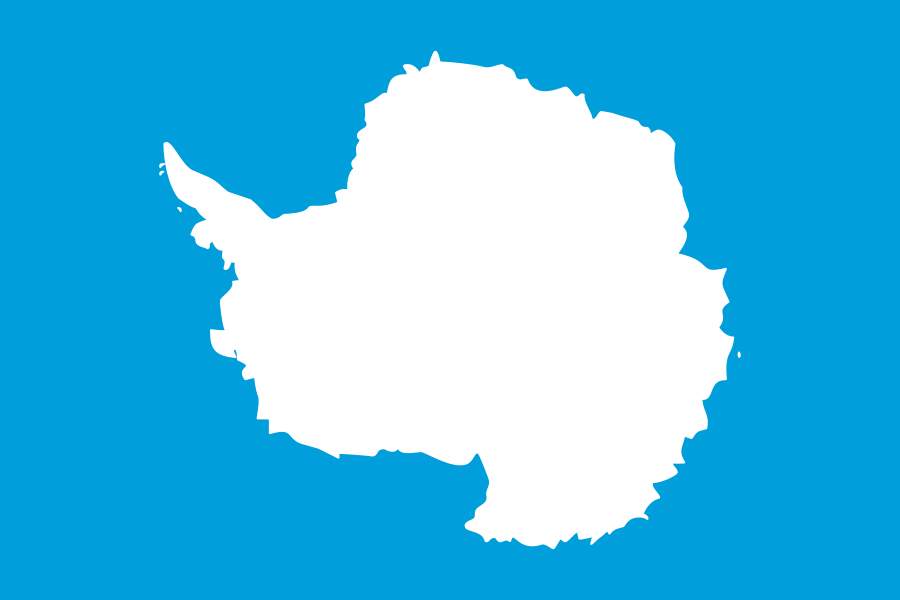
A white outline of the continent on UN blue — Graham Bartram's widely-used flag for the only land governed by an international treaty, not a nation.
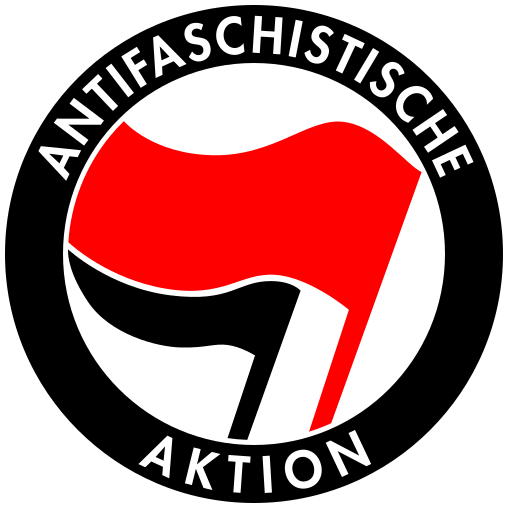
Two flags — one red, one black — in a circle, derived from a 1932 German Communist Party anti-fascist emblem and revived worldwide decades later.
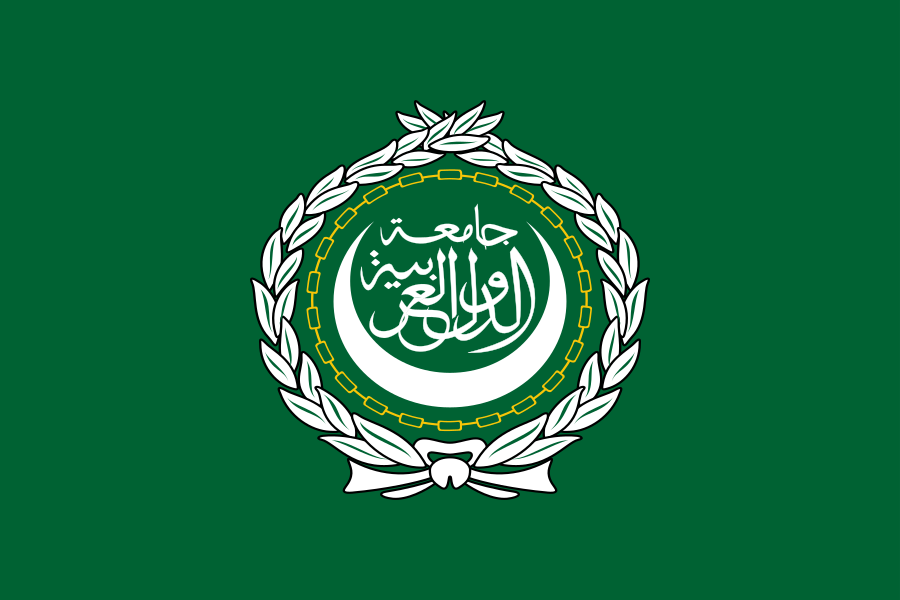
A green field with the league's name in white Arabic script encircled by a chain and laurel — the League of Arab States.
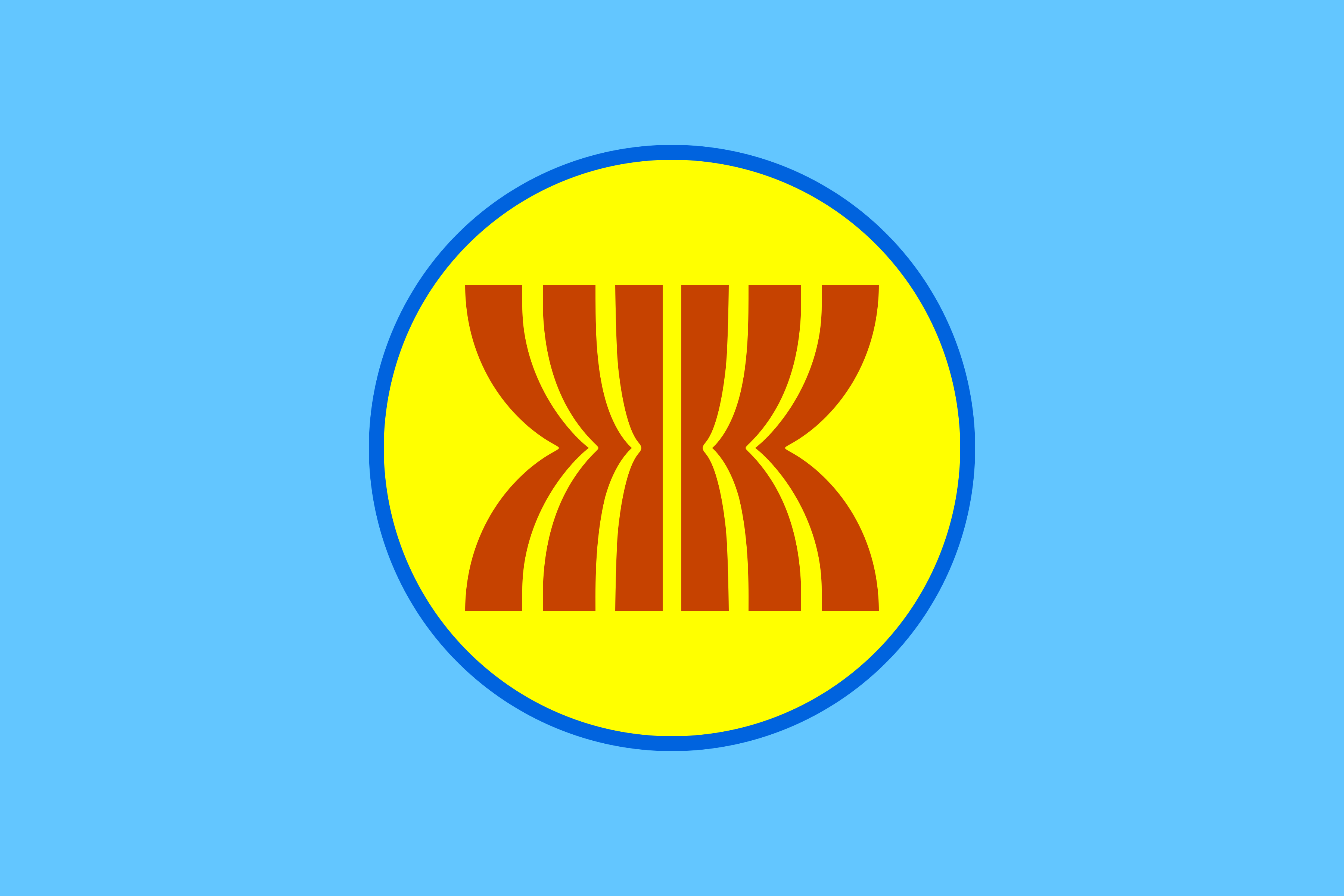
Ten rice stalks bound together in a red circle on blue — the Association of Southeast Asian Nations, the stalks standing for its founding aspiration of unity.
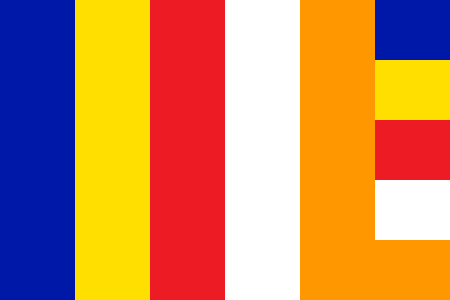
Five vertical colour bands plus a sixth combined band, designed in 1885 to represent the aura of the Buddha; now flown by Buddhists worldwide.
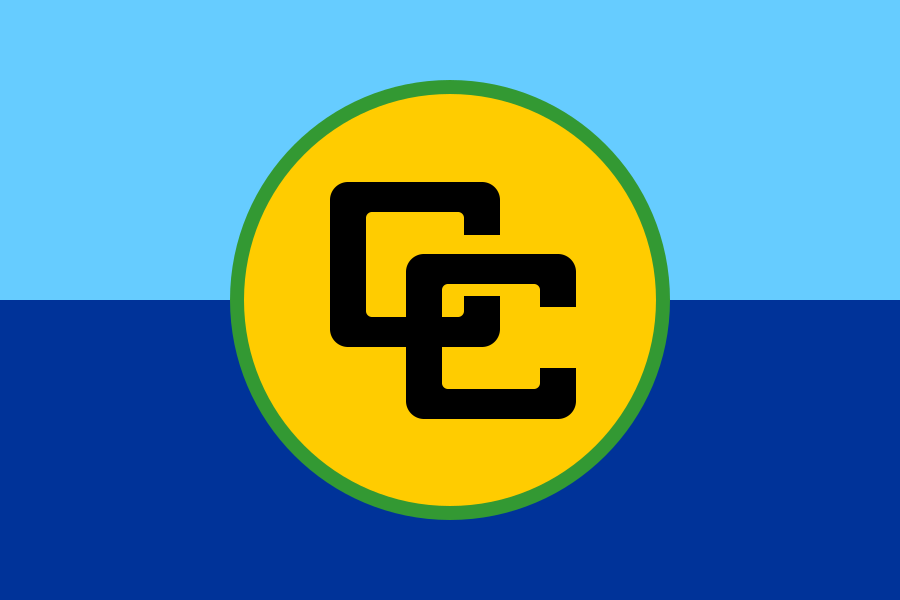
A blue-and-green field with a yellow disc broken by a black ring — the Caribbean Community of fifteen member states.
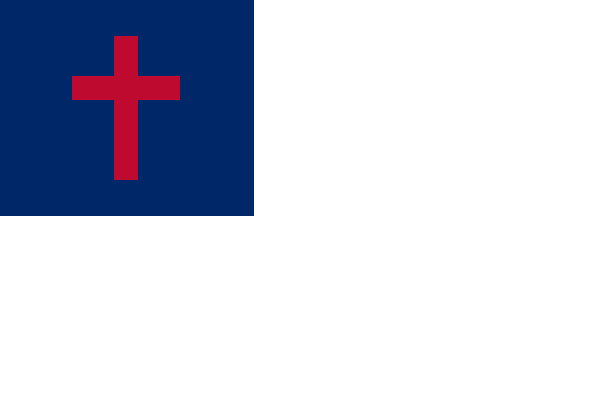
A red Latin cross on a blue canton over white — an interdenominational flag dating to 1897 in the United States.
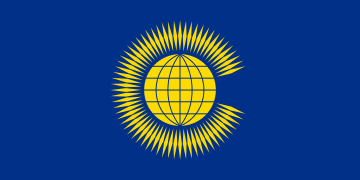
A golden globe radiating spokes on blue — flag of the 56-member association of mostly former British Empire states.
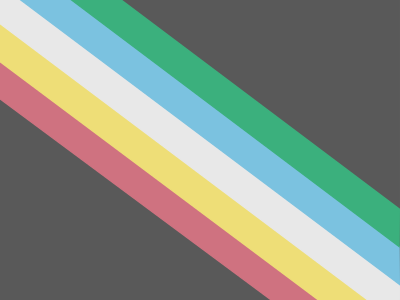
A charcoal field with a diagonal band of five colours — Ann Magill's 2019 design for the disability community.
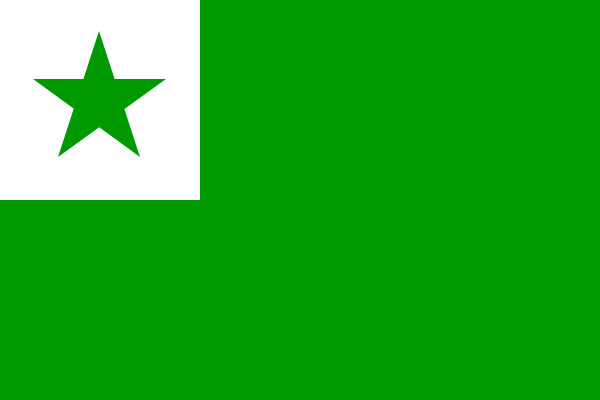
The green flag with a white canton and green 'verda stelo' star, adopted in 1905 as the symbol of the international constructed language and its movement.
A circle of gold lines forming a stylised globe on white — the Russia-led economic union of post-Soviet states.
An hourglass inside a circle — the emblem of the climate-action movement, signalling time running out.
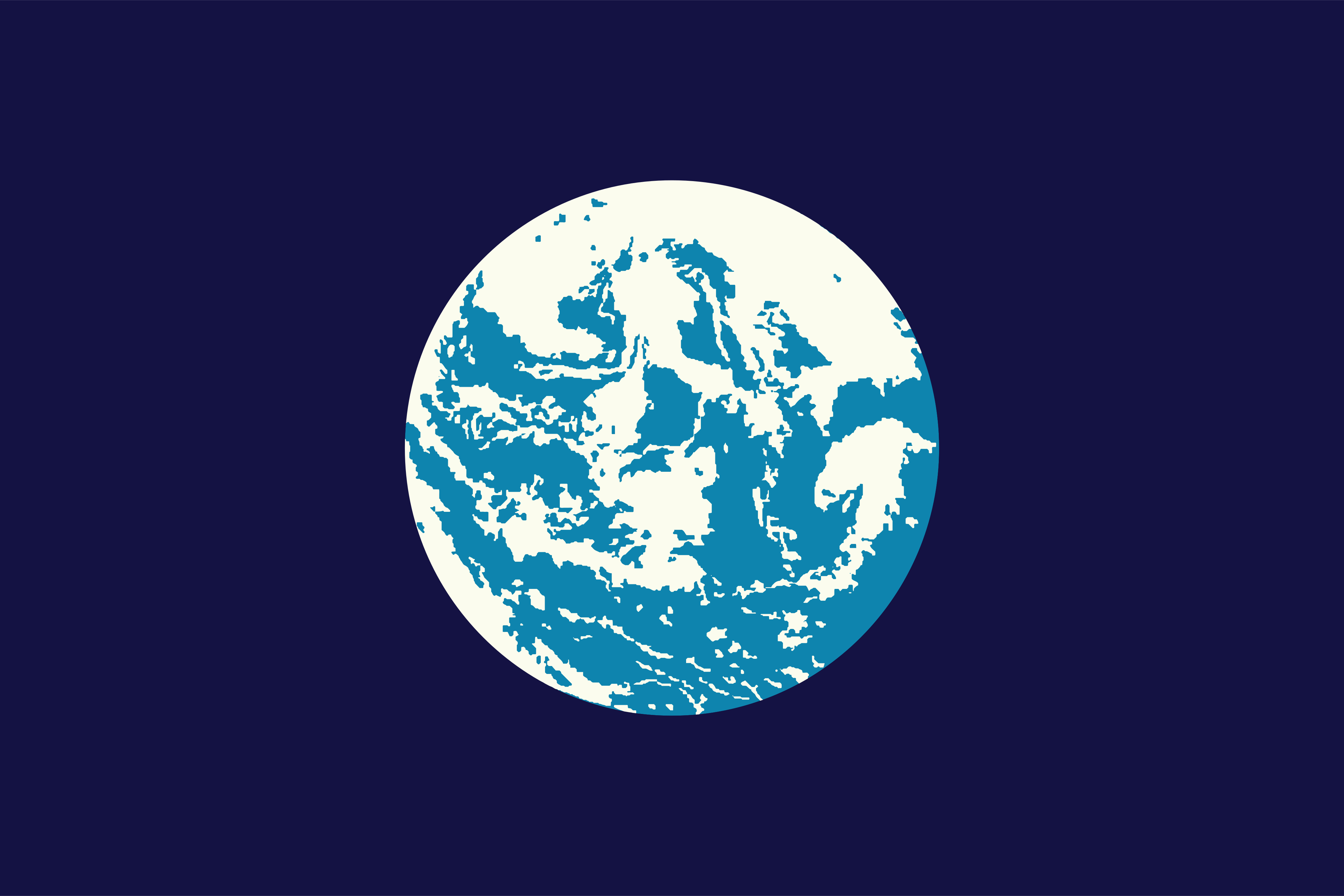
John McConnell's 1969 Earth Day flag: NASA's 'Blue Marble' photograph of Earth on a dark blue field, an emblem of the environmental movement.
A ring of twelve gold stars on blue — symbol of unity used by both the Council of Europe and the European Union; the twelve is fixed, not a count of members.
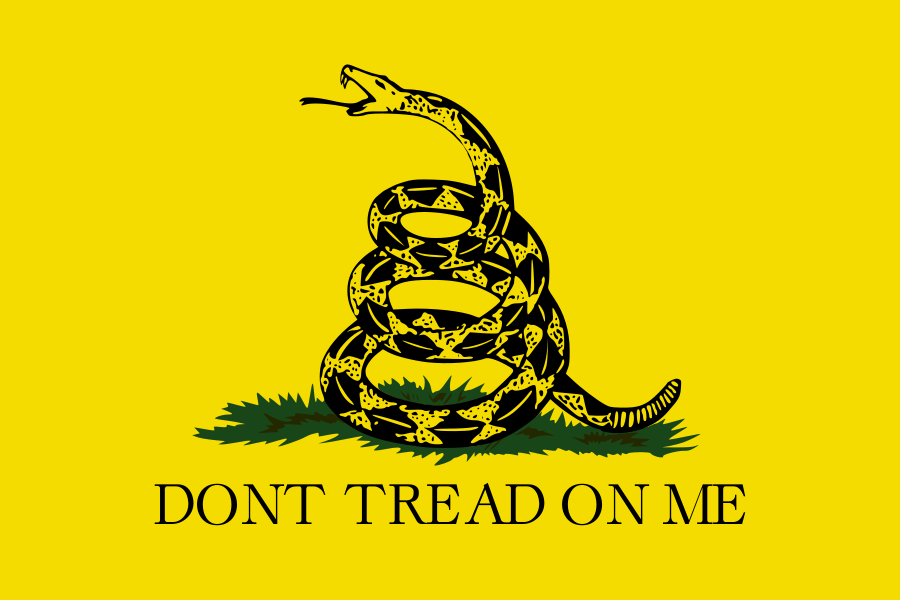
A 1775 American Revolutionary banner — a coiled rattlesnake over 'DONT TREAD ON ME' on yellow — that has become a major modern symbol of individualism and protest.
A stylised figure with arms raised — the international icon of secular humanism.
The classic black pirate flag with a white skull over crossed bones — historically a signal of 'no quarter', now a universal pop-culture symbol of rebellion.
The emblem of the international organization of French-speaking nations: five interlocking colored arcs forming a ring on white.

The Southern Cross over a green wreath on blue — South America's main trade bloc.
A white compass star inside a circle on dark blue — emblem of the North Atlantic Treaty Organization, adopted 1953.
Five interlocking rings for the five inhabited continents, in colours chosen so every national flag contains at least one. Designed by Pierre de Coubertin in 1913.
A red crescent within a white disc tilted on green — the 57-member bloc that calls itself the collective voice of the Muslim world.
The member states' flags furled around a central staff on blue — the main political body of the Americas.
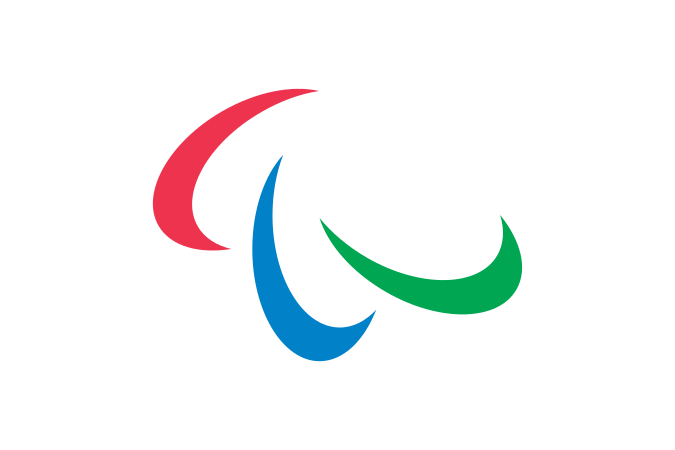
Three 'agitos' in red, blue and green on white — the symbol of the Paralympic Games.
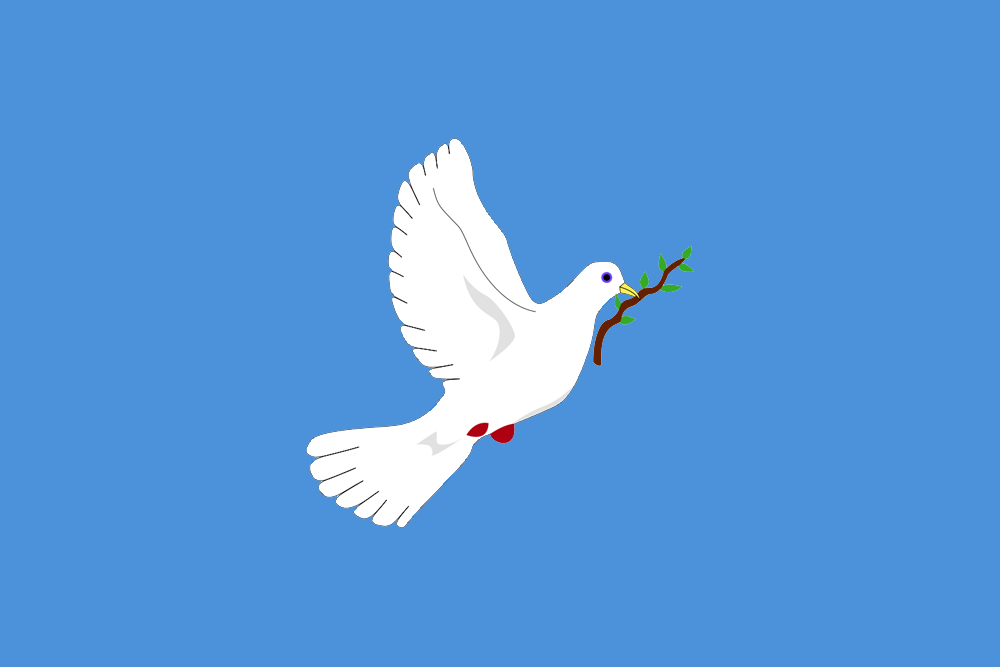
The rainbow 'PACE' banner widely flown in peace marches, especially in Italy.
The equivalent humanitarian emblem used across much of the Muslim world, carrying the same protected status as the Red Cross.
A red cross on white, protected under the Geneva Conventions as a symbol of medical neutrality — the reverse of the Swiss flag, honoring the movement's Swiss founder.
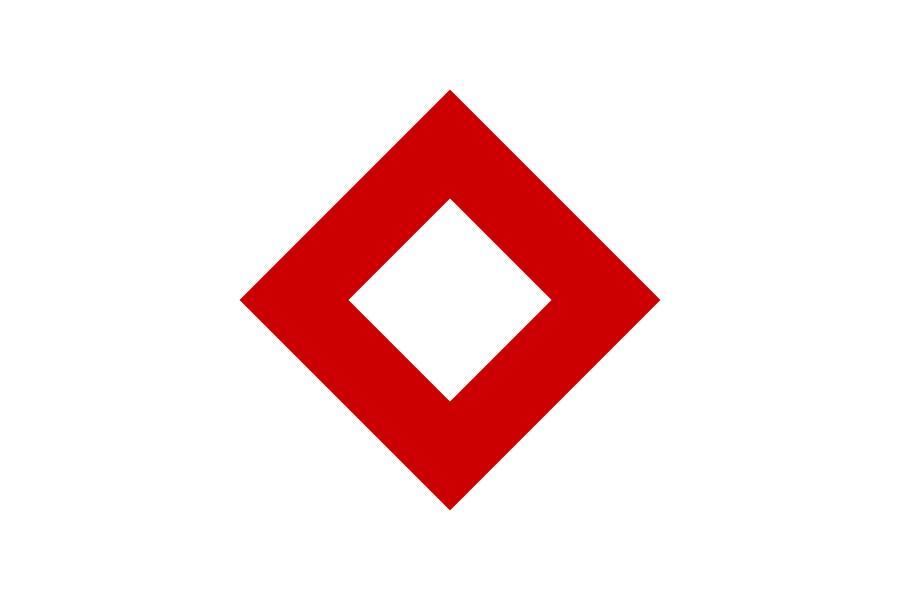
A neutral third emblem — a red diamond outline on white — adopted in 2005 for contexts where neither the cross nor crescent is acceptable.

The plain red banner — a universal symbol of socialism and the labour movement since the 19th century.
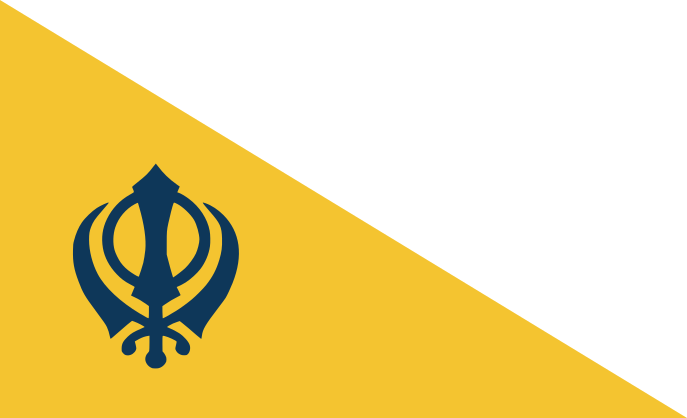
The saffron (or blue) triangular flag bearing the Khanda emblem, flown at every gurdwara — the standard of the Sikh faith.
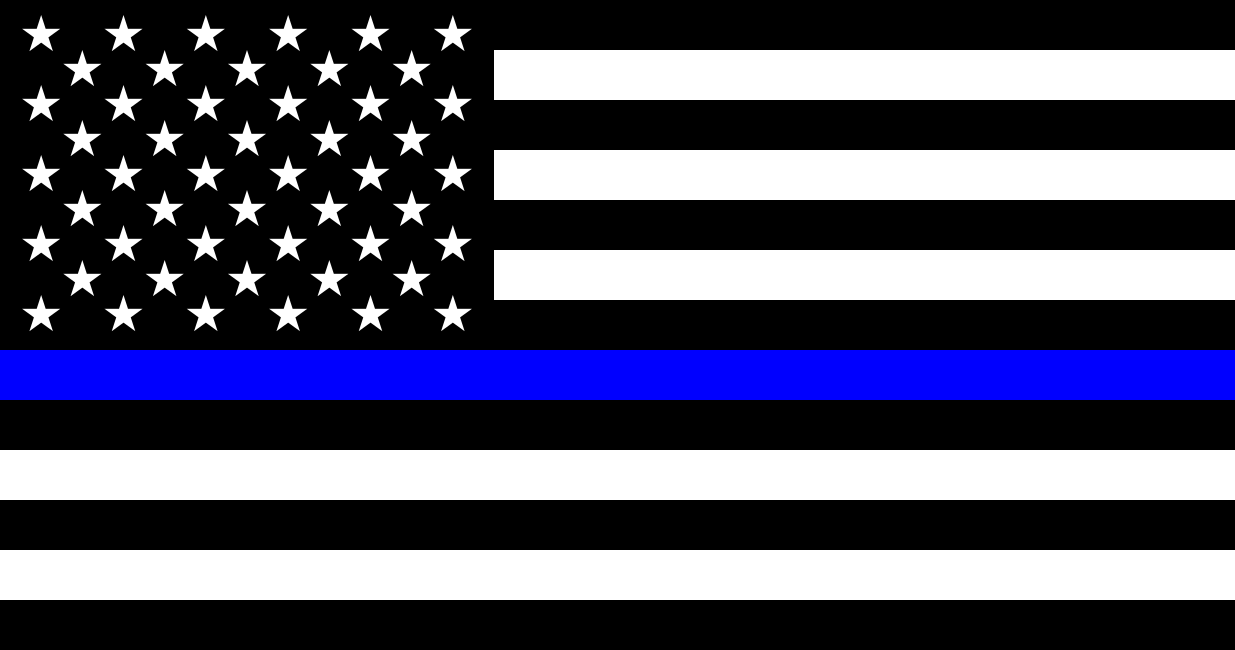
A monochrome US flag with a single blue stripe, used to signal solidarity with law enforcement — and a lightning rod in debates over policing.
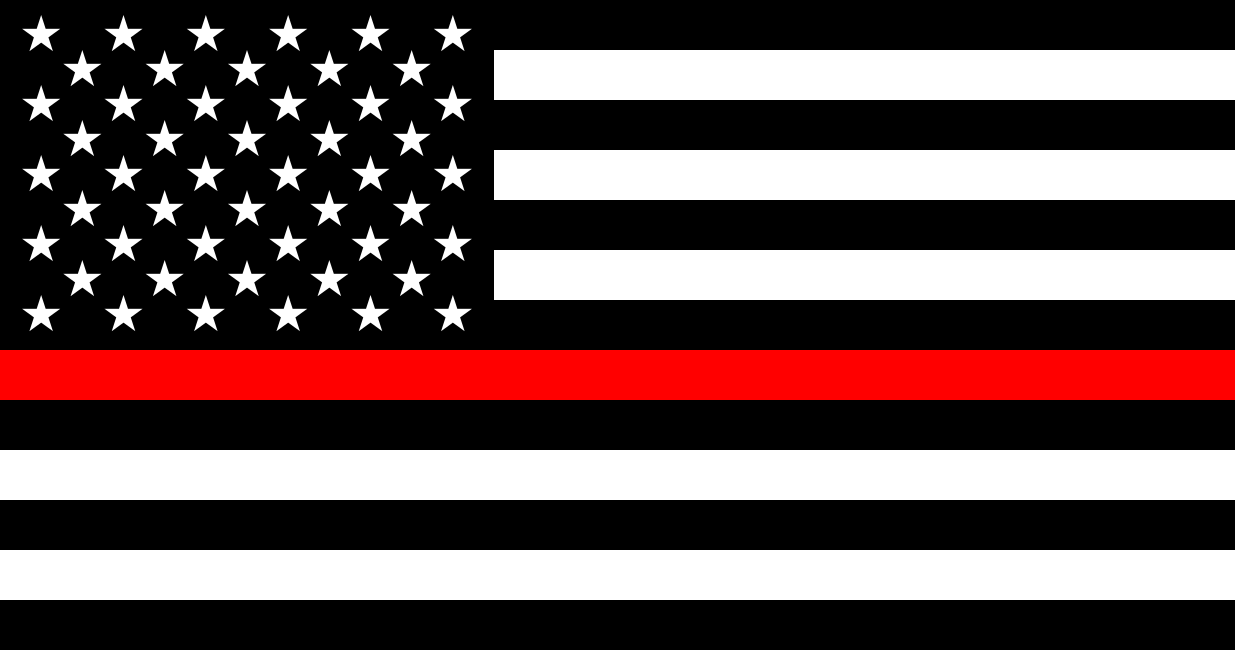
The same monochrome US-flag concept with a red stripe, representing firefighters and the fire service.
A stylised temple façade on blue — the UN's education, science and culture agency, keeper of the World Heritage list.
A mother and child before a globe inside olive branches — the UN's children's agency.
A world map seen from the North Pole wrapped in olive branches of peace, on UN blue — adopted 1946.
Two blue and green triangles forming a 'V' — a 2017 international symbol of veganism.
The UN emblem with the Rod of Asclepius (a snake-entwined staff of medicine) on UN blue.
A white fleur-de-lis encircled by rope tied in a reef knot, on purple — the worldwide emblem of Scouting.