Americas
Flag of Saint Vincent and the Grenadines
Saint Vincent and the Grenadines is a Caribbean island nation consisting of the main island of Saint Vincent and 32 smaller Grenadine islands and cays. The Grenadines — including Bequia and the Tobago Cays — are among the Caribbean's most sought-after sailing destinations. Saint Vincent is home to La Soufrière, an active volcano that erupted dramatically in 2021, and is one of the Caribbean's leading producers of arrowroot.

- CapitalKingstown
- RegionAmericas
- Current flag since1985
- Main coloursGreen, Yellow, Blue
- Populationabout 100,000
- Areaabout 389 km²
- GeographyIsland nation
- Flags in history3
Population and area are rounded.
What the flag of Saint Vincent and the Grenadines means
The three green diamonds form a V for Saint Vincent and are known as the Gems of the Antilles. Blue stands for the sky and sea, gold for sunshine and the spirit of the people, and green for the island's vegetation. The current design was adopted in 1985.
More about the flag
Saint Vincent and the Grenadines has changed its flag twice since independence from Britain on 27 October 1979. The first flag showed a breadfruit leaf with the coat of arms; it was replaced in 1985 by a design by the Swiss graphic artist Julien van der Wal. The diamonds sit low in the yellow band. The country includes Saint Vincent and 32 islands of the Grenadines.
How to recognise it
Vertical blue-yellow-green with three green diamonds arranged in a V shape on the yellow stripe.
Did you know?
Saint Vincent has the only yellow-green-blue tricolour with diamonds in the Caribbean.
Flag history of Saint Vincent and the Grenadines
Every flag that has flown over Saint Vincent and the Grenadines, from today back through time.
1985–present
Saint Vincent and the Grenadines
Saint Vincent's current flag — blue-gold-green vertical stripes with three green diamonds in a V formation on the gold — was adopted in 1985, replacing a version with a breadfruit leaf. The three diamonds represent the Grenadine islands; the blue represents the sky and sea; gold the warmth of the people; green the lush vegetation. Saint Vincent is known as the "Gem of the Antilles" and the last stronghold of the indigenous Caribs (now called Garifuna) in the Caribbean.
1979–1985
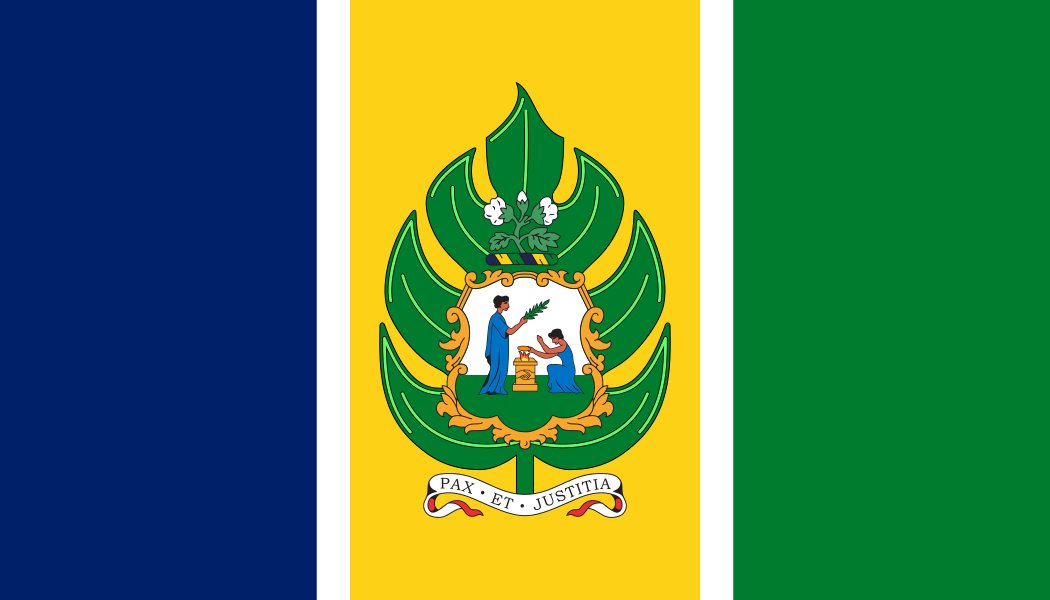
First independence flag (breadfruit)
At independence in 1979, Saint Vincent's first flag carried the national coat of arms — featuring a breadfruit leaf — on a blue-gold-green tricolor. Breadfruit was famously brought to Saint Vincent by Captain Bligh in 1793 (after the mutiny on the Bounty derailed his first attempt) as a cheap food for the enslaved population. The busy arms were replaced in 1985 by the cleaner three-diamond design used today.
1763–1958
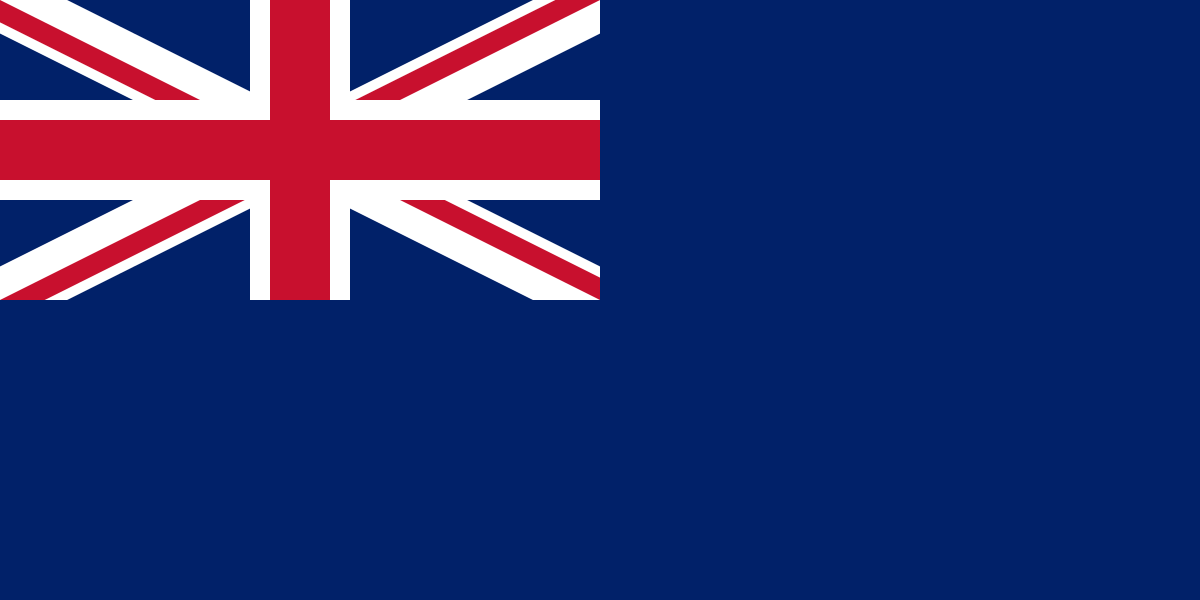
British Windward Islands (colonial era)
Saint Vincent was one of the last Caribbean islands colonised, because the indigenous Garifuna (Black Caribs) — descendants of Caribs and shipwrecked Africans — fiercely resisted European settlement until the Second Carib War of 1795–96. After their defeat, the British deported thousands of Garifuna to Central America, where their descendants survive today. As part of the British Windward Islands, Saint Vincent flew the defaced Blue Ensign.
Other flags in green, yellow and blue
2 other national flags use the same main colours as Saint Vincent and the Grenadines'.
Play Globalio and learn Saint Vincent and the Grenadines' flag
 Gabon
 Rwanda