Europe
Flag of Cyprus
Cyprus is an island nation in the Eastern Mediterranean — the third-largest island in the sea — known as the mythological birthplace of the goddess Aphrodite. The island has been divided since 1974, with the northern portion under Turkish administration and the internationally recognised Republic of Cyprus governing the south. It is famous for its warm climate, ancient ruins, Venetian walls, and the unique copper-coloured map depicted on its national flag.

- CapitalNicosia
- RegionEurope
- Current flag since2006
- Main coloursWhite, Orange
- Populationabout 1.2 million
- Areaabout 9,000 km²
- GeographyIsland nation
- Flags in history3
Population and area are rounded.
What the flag of Cyprus means
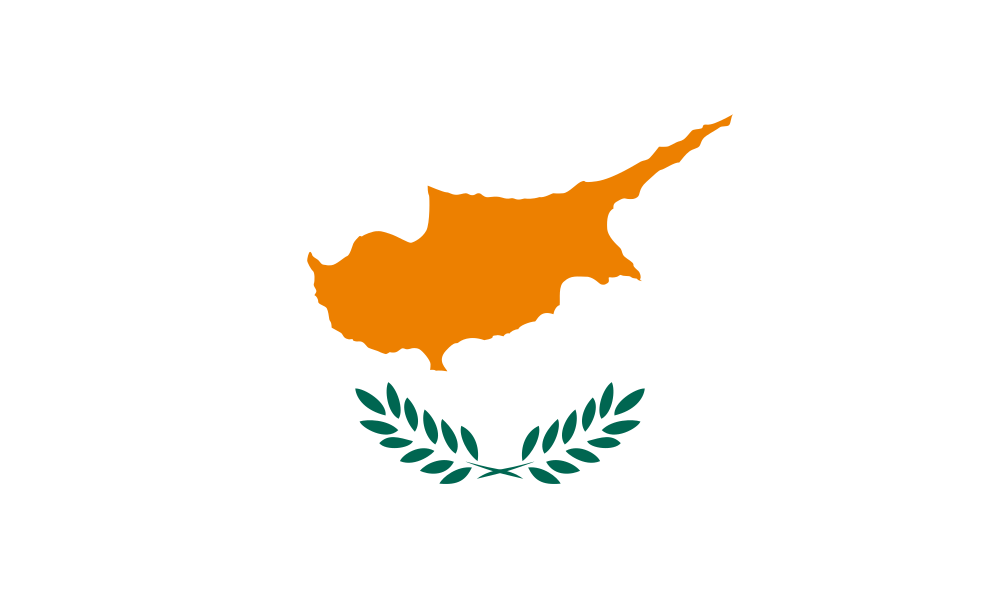
Adopted at independence in 1960, the flag was designed to be neutral between the Greek and Turkish Cypriot communities, so it avoids the blue and white of Greece and the red of Turkey. The island's outline is coloured copper-orange, a nod to the copper Cyprus has been known for since antiquity and which may give the island its name. The two olive branches stand for peace between the communities.
More about the flag
Cyprus is one of only two countries whose flag shows a map of the country, the other being Kosovo. Although it is the official flag, many Greek Cypriots also fly the flag of Greece and many Turkish Cypriots the flag of Turkey beside it. The north of the island has been controlled since 1974 by the Turkish Republic of Northern Cyprus, recognised only by Turkey, which uses its own white flag with red stripes and a red crescent and star.
How to recognise it
White flag with a copper-coloured map of the island above two crossed olive branches.
Did you know?
Cyprus is one of only two countries whose flag shows a map of the country. The other is Kosovo.
Flag history of Cyprus
Every flag that has flown over Cyprus, from today back through time.
2006–present
Copper island on white
In 2006 the shades were standardized and proportions set to 3:2. The map is rendered in copper for Cyprus's ancient copper mines, above two olive branches for peace — deliberately avoiding the colors of Greece and Turkey.
1960–2006
Independence flag (1960)
Adopted at independence from Britain in 1960, the flag deliberately avoided any cross or crescent and the blue/red of the two motherlands, aiming for neutrality between Greek and Turkish Cypriots.
1922–1960
British Crown Colony
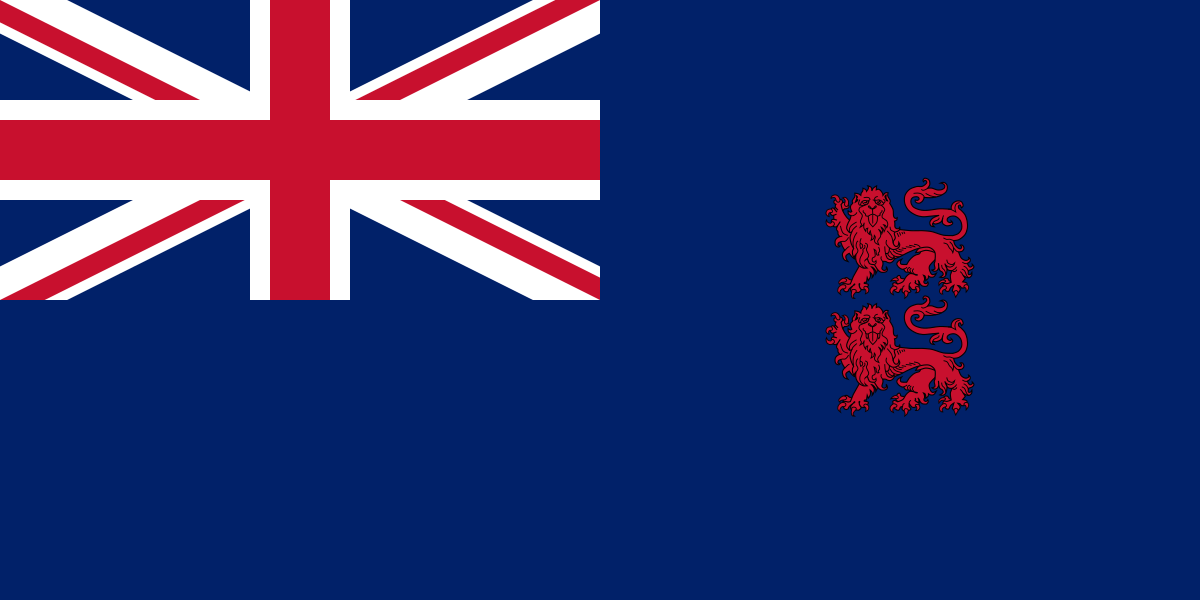
A British protectorate from 1878 and a Crown Colony from 1925, Cyprus flew the British Blue Ensign defaced with the colonial badge — two red lions on a white shield, drawn from the arms of the Crusader Lusignan kings who once ruled the island. Cyprus had no flag of its own until independence in 1960.
Play Globalio and learn Cyprus' flag